Faster simulations, better decisions: a FAST 2025 case study shows how early-stage design space exploration can identify efficient planing hull geometries before committing to CFD.


Faster simulations, better decisions: a FAST 2025 case study shows how early-stage design space exploration can identify efficient planing hull geometries before committing to CFD.

Engineering design has evolved from hand-drawn sketches and wooden splines to CAD, parametric modeling, simulation-driven design, and now Generative AI. Each shift expands creativity, accelerates exploration, and enhances decision-making, transforming engineering into a more intelligent, data-driven, and human-centered process.

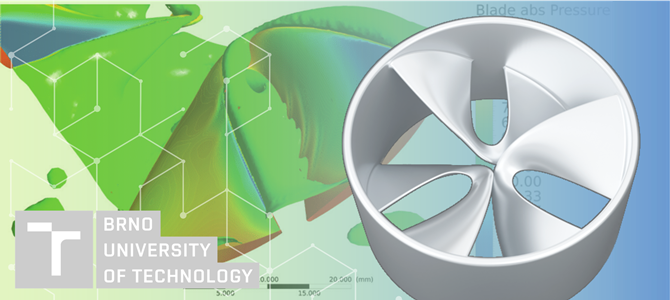
A new era of underwater propulsion is emerging – powered by CAESES. In a bachelor’s thesis at Brno University of Technology, a hybrid toroidal rim-driven propeller was developed for compact underwater drones, combining toroidal blade geometry with rim-driven technology. Using CAESES for parametric modeling and CFD integration, the design achieved higher efficiency, lower noise, and exceptional debris resistance, showcasing how smart automation and simulation-driven design can redefine marine propulsion.

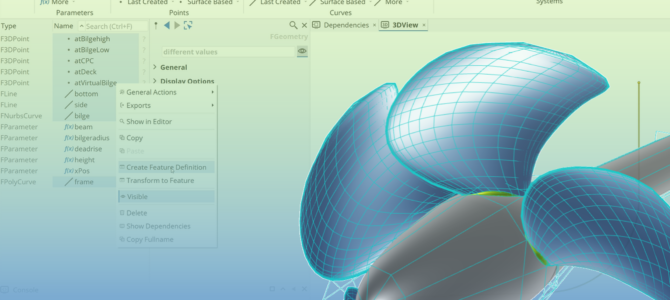
CAESES is packed with powerful capabilities designed to accelerate simulation-driven design, but some of its most impactful features often go unnoticed. In this blog, we spotlight five advanced tools that can help you optimize geometry, enforce constraints, streamline workflows, and push the automation design further.