Release 5.3 – the maritime special
The newly released CAESES version 5.3 was developed with a strong focus on the design of marine systems such as ship hulls and propulsors. Its new functionality is primarily dedicated to users with the CAESES add-ons Maritime and Propeller, but it also brings along several news and improvements that will benefit all users. Many of the developments included in this release were driven by direct customer input, as well as by requirements from FRIENDSHIP SYSTEMS’ own project and support engineers, with years of experience working on the field.
Similarly to the previous turbomachinery focused release, the guiding principle of this release was to simplify and streamline typical processes such as the modeling of parametric geometries and their evaluation.
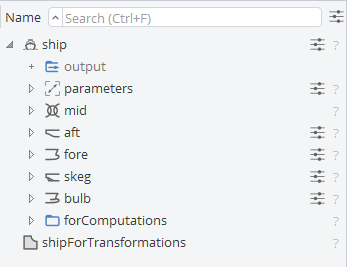
Ship Object and Modeling Workflow
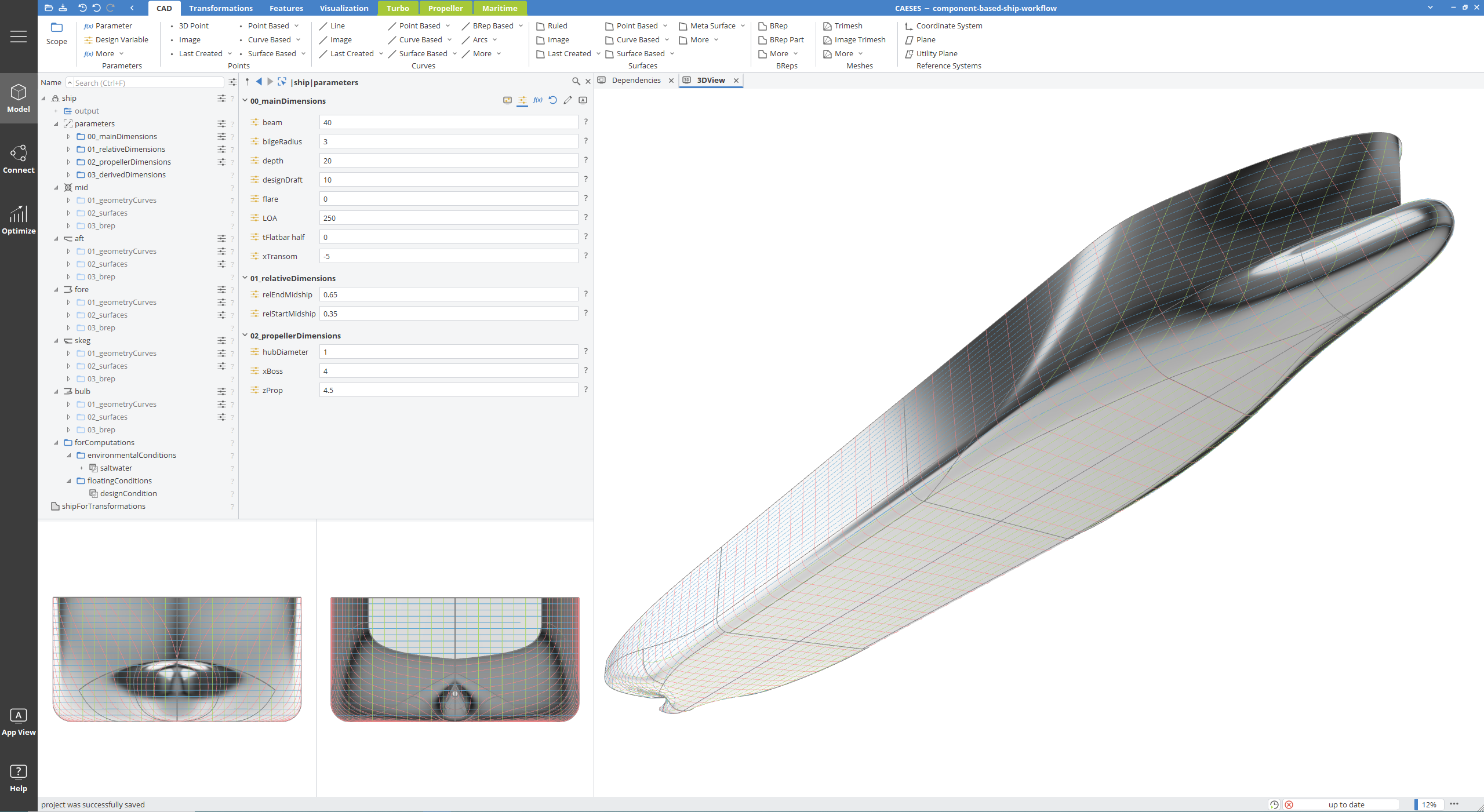
A new modular ship modeling workflow was implemented that guides the user though the process in an easy to follow step-by-step manner. Define main dimension and gradually add components like aft, mid, and fore ship, bulb, and skeg. Different options for each component – based on different modeling approaches – will be offered, from a library that will continuously be expanded.
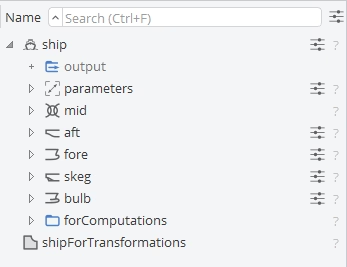
Ship Object with components
All of this will be embedded in the new so-called Ship Object, a high-level entity that stores all relevant information and readily provides it to downstream steps in the process, like hydrostatic computations or flow simulations. Apart from the geometrical parameters, additional information can be added to the Ship Object, like floating, operating, and environmental conditions.
Of course, the Ship Object can also be used for hull geometries that are not a result of the new modeling workflow. A Generic Ship Object can be fed with a differently modeled geometry, or even an imported model, will automatically extract the main dimensions, and can otherwise be processed in exactly the same way as previously explained.
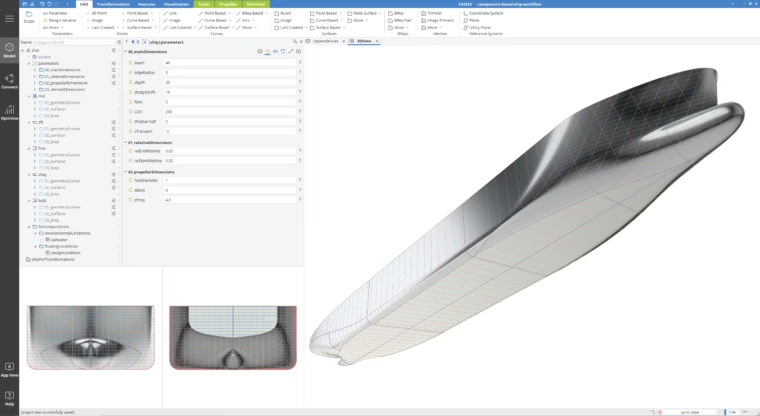
Component-based ship model
Hydrostatic Calculations
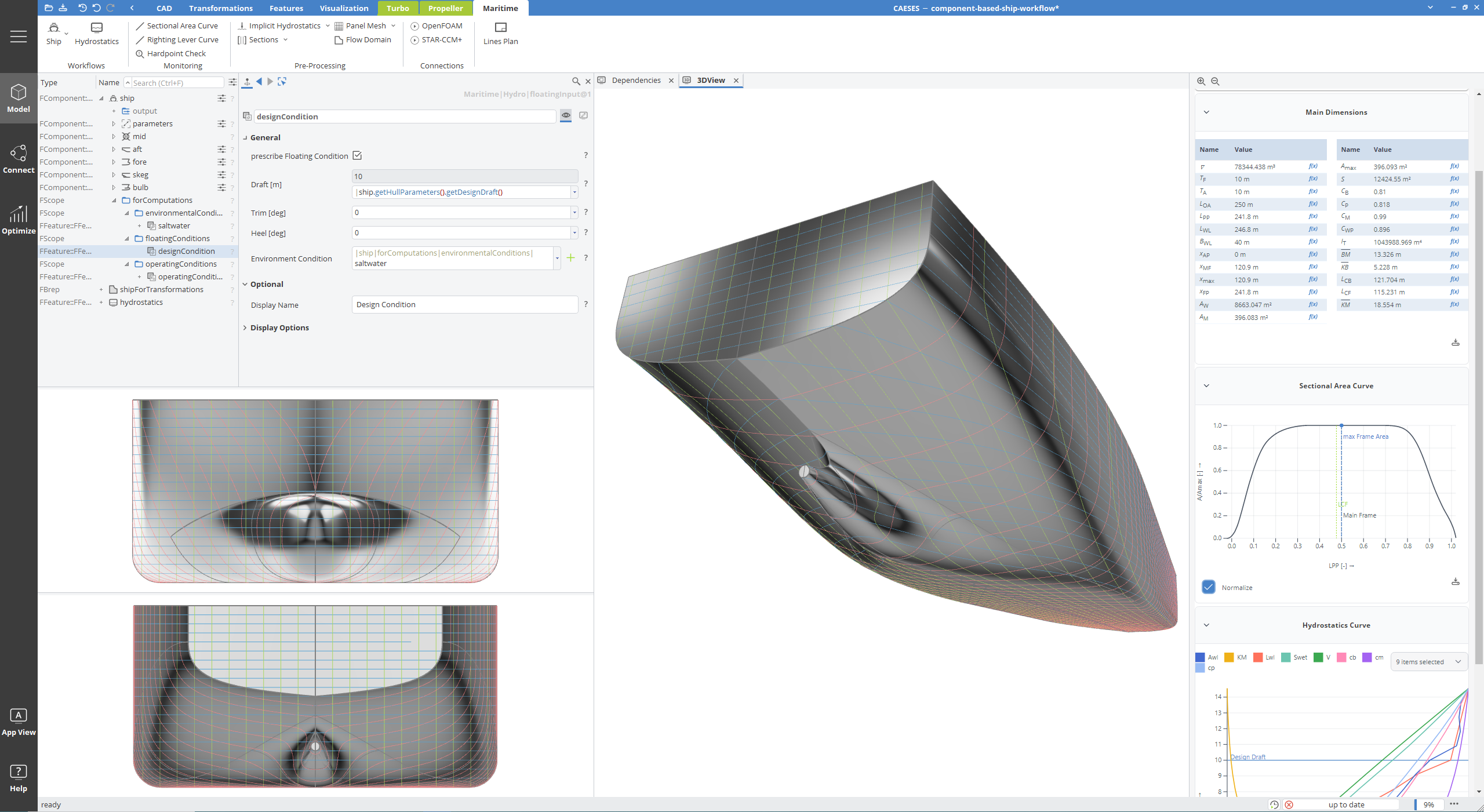
A completely new environment for hydrostatic calculations has been implemented. Based on the input provided by a Ship Object, the new hydrostatics in CAESES provide the following capabilities:
- A new find equilibrium algorithm, which is faster, more robust, and reliable.
- Computation of form parameters, i.e., an extensive list of all the typically relevant parameters a naval architect likes to monitor when designing.
- Much faster and easier determination of the sectional area curve.
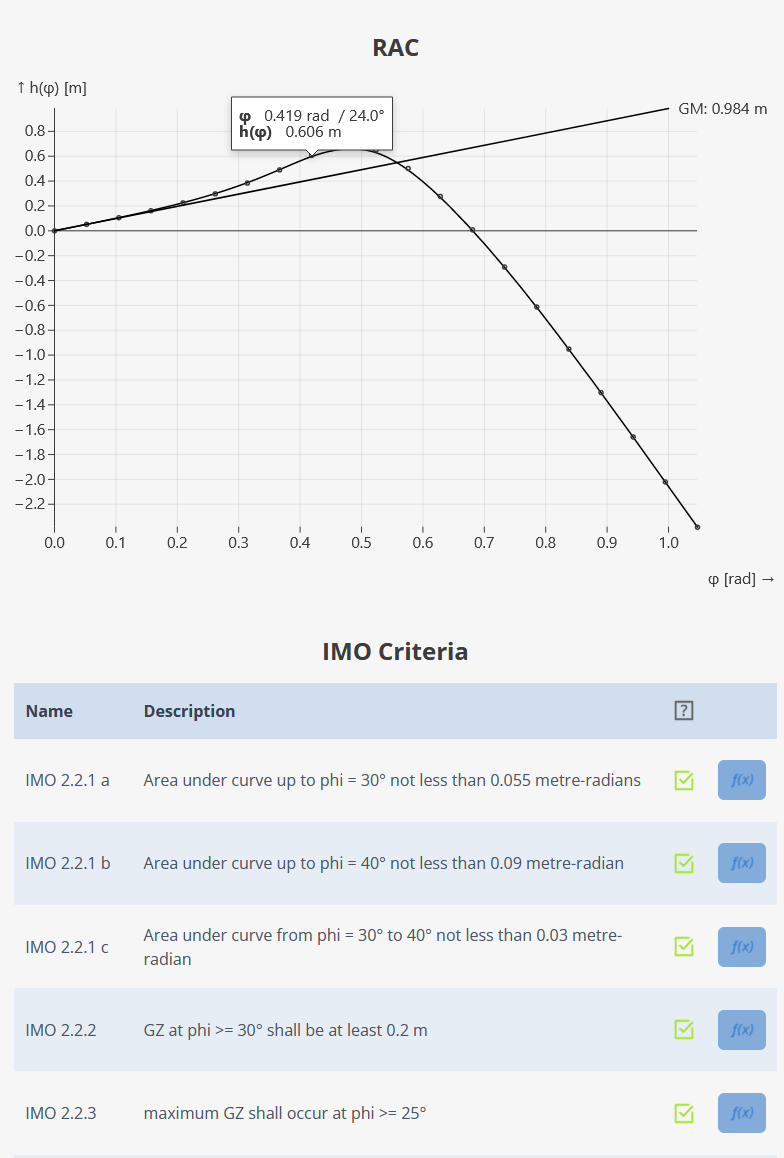
- Righting lever curve computation with or without free trim.
- Automated and readily available IMO rule checking.
- Complete hydrostatics validated against other established tools.
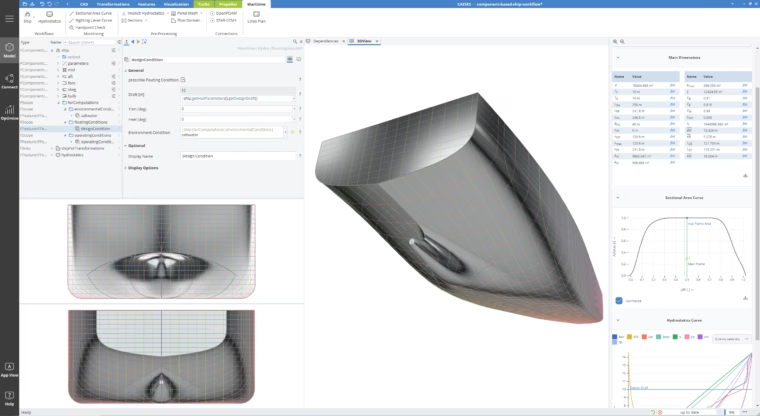
Ship model with hydrostatics results
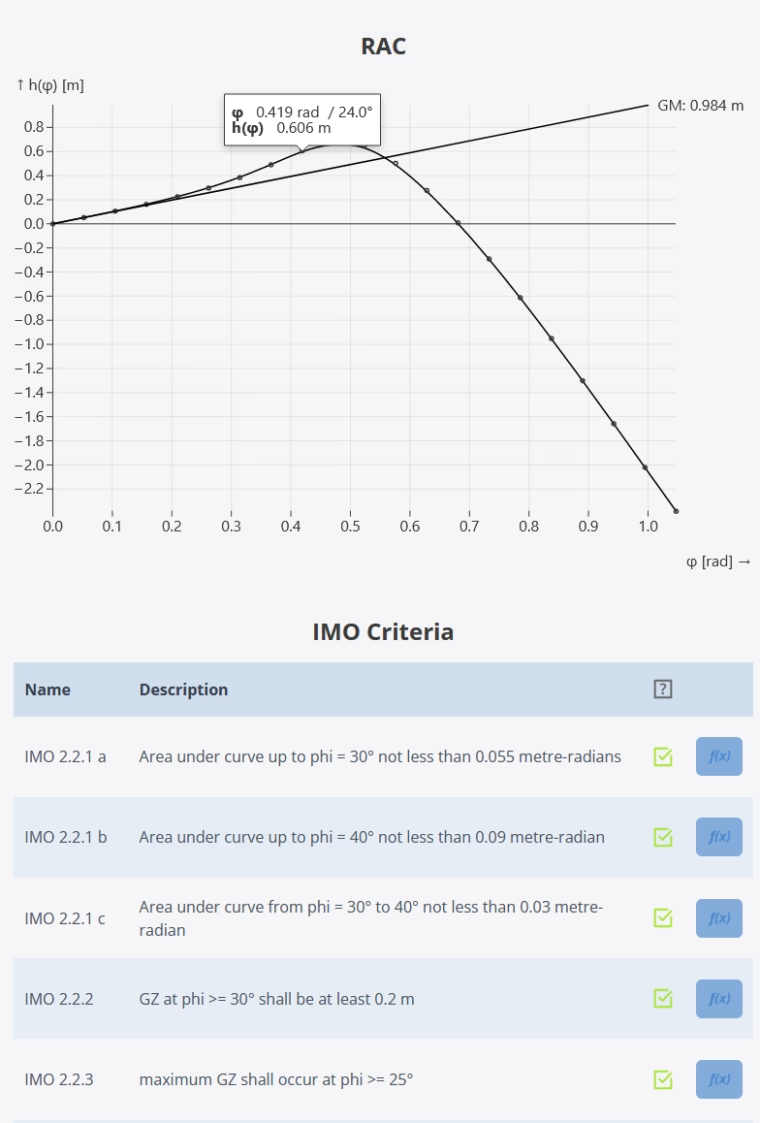
Righting lever curve
In addition to the general computations, the new Implicit Hydrostatics functionality can be used to match any ship perfectly to any desired hydrostatic constraints (LCB, displacement, mid-frame position, length of the parallel midship can all be controlled and adjusted simultaneously exactly to the specified requirements) using an easy to set up Generalized Lackenby.
Propeller Modeling Workflows
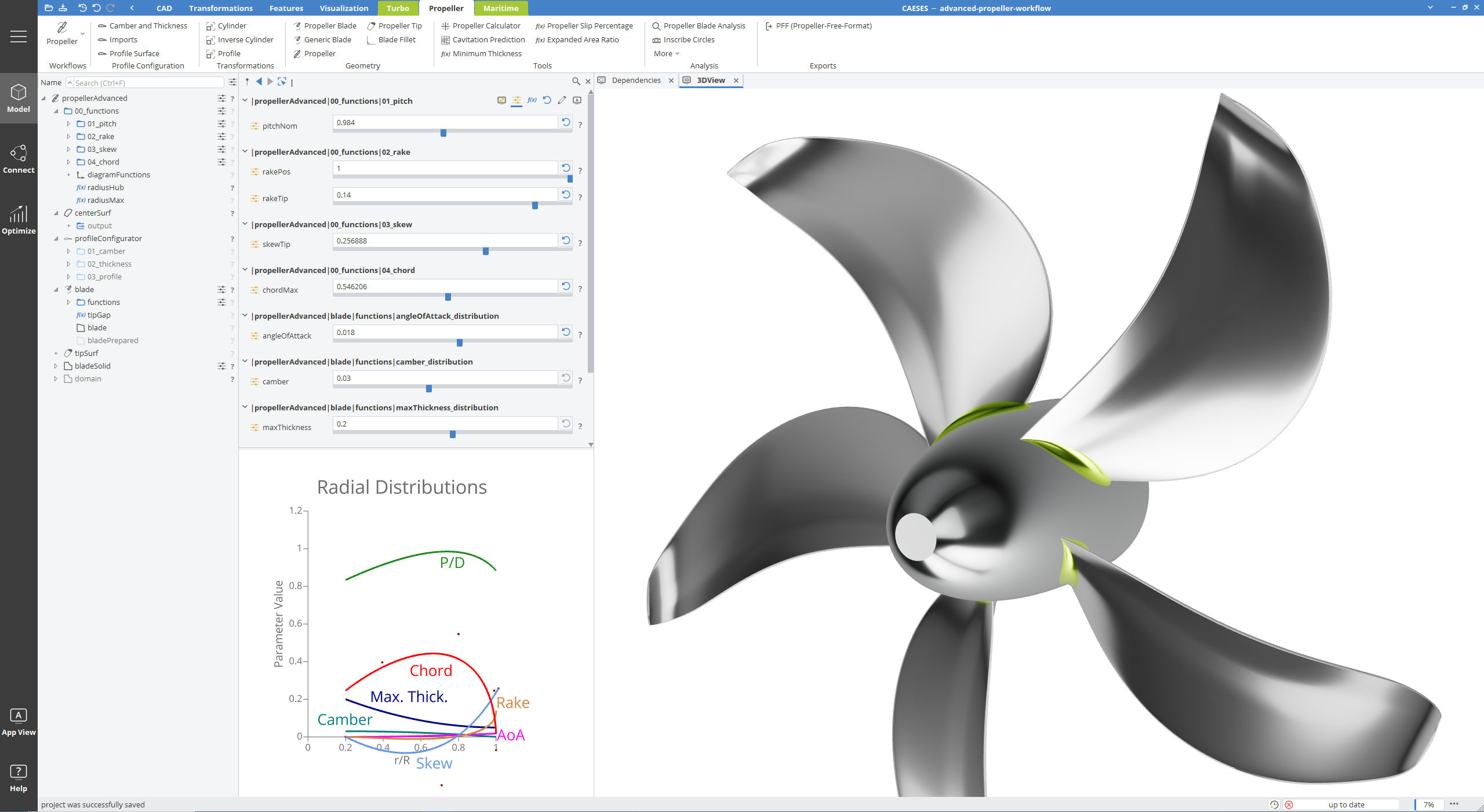
Propeller designers will also benefit from newly introduced modeling workflows in CAESES 5.3. Again, these will provide an easy to follow process that leads the user though the different steps and intricacies involved in the generation of a parametric propeller geometry — from the definition of the first basic properties, all the way to a model that is readily usable for simulation. With the help of the new modeling workflows, virtually any type of propeller can easily and conveniently be modeled in CAESES, including conventional, high skew, tip rake, surface piercing, and toroidal propellers.
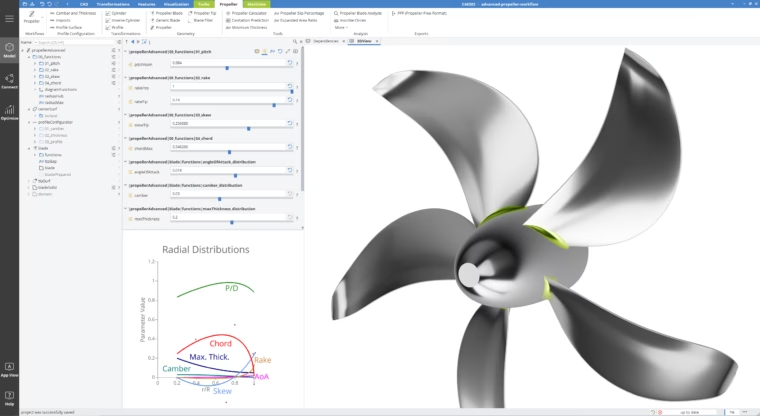
Tip-rake propeller modeled with the Advanced Propeller Workflow
As the blade profiles are a crucial centerpiece of any propeller, a suite of tools is available for their configuration and parameterization: profiles from airfoil databases (e.g., in Selig or Lednicer format) can be imported and processed, or profiles can be generated from camber and thickness distributions, which are either given as curves for a single profile or as surfaces in normalized space for a complete blade. Once the blade surface is generated, it can be finalized with a newly implemented tip, as well as an improved variable radius root fillet.
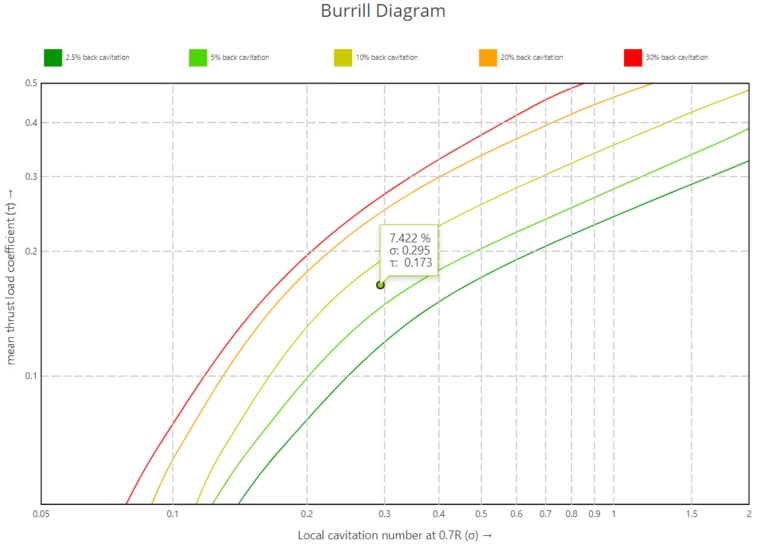
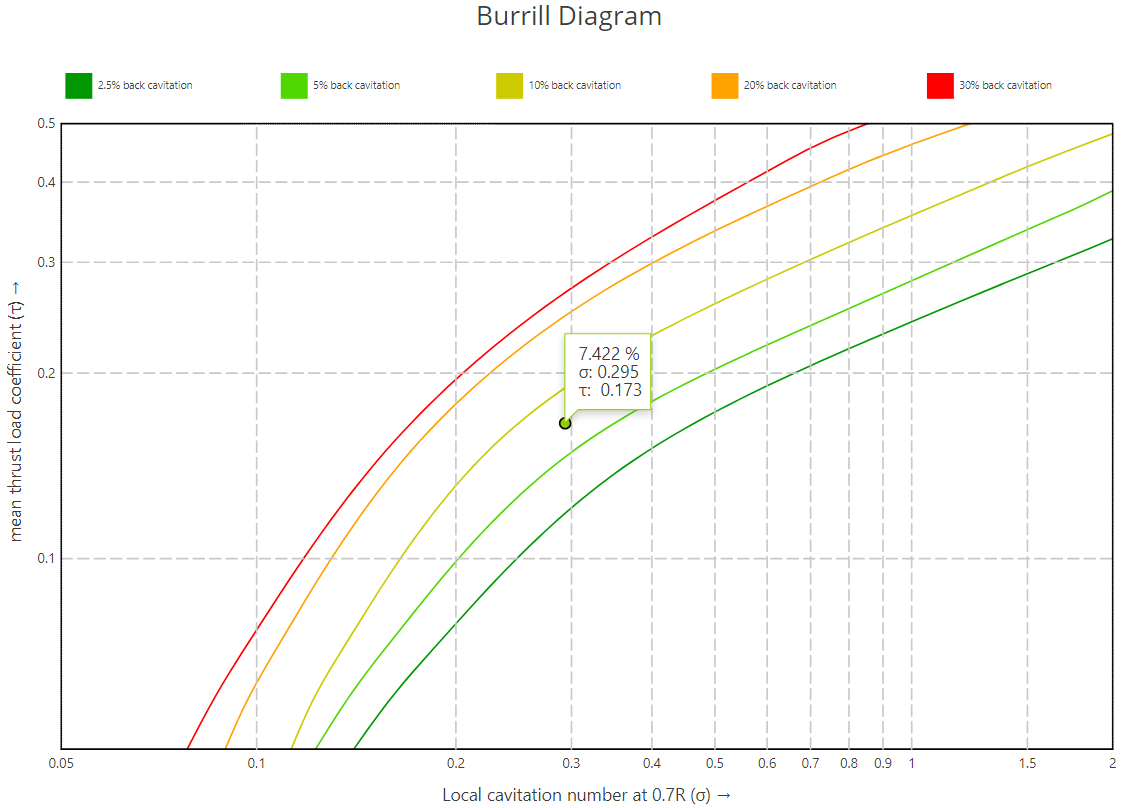
Burrill diagram
To evaluate the properties of a propeller design, different calculation routines are provided, such as a calculator for the main particulars, cavitation analysis using the Burrill diagram, minimum thickness calculation according to class rules, a propeller slip calculator, and the determination of the expanded area ratio.
New Documentation
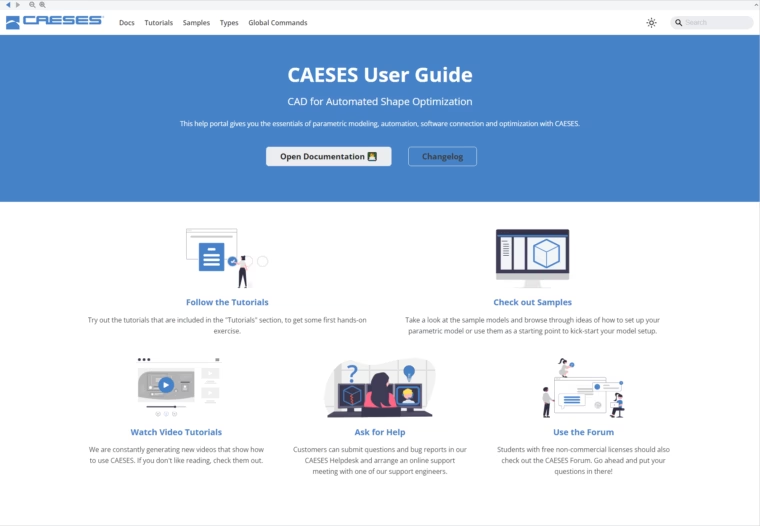
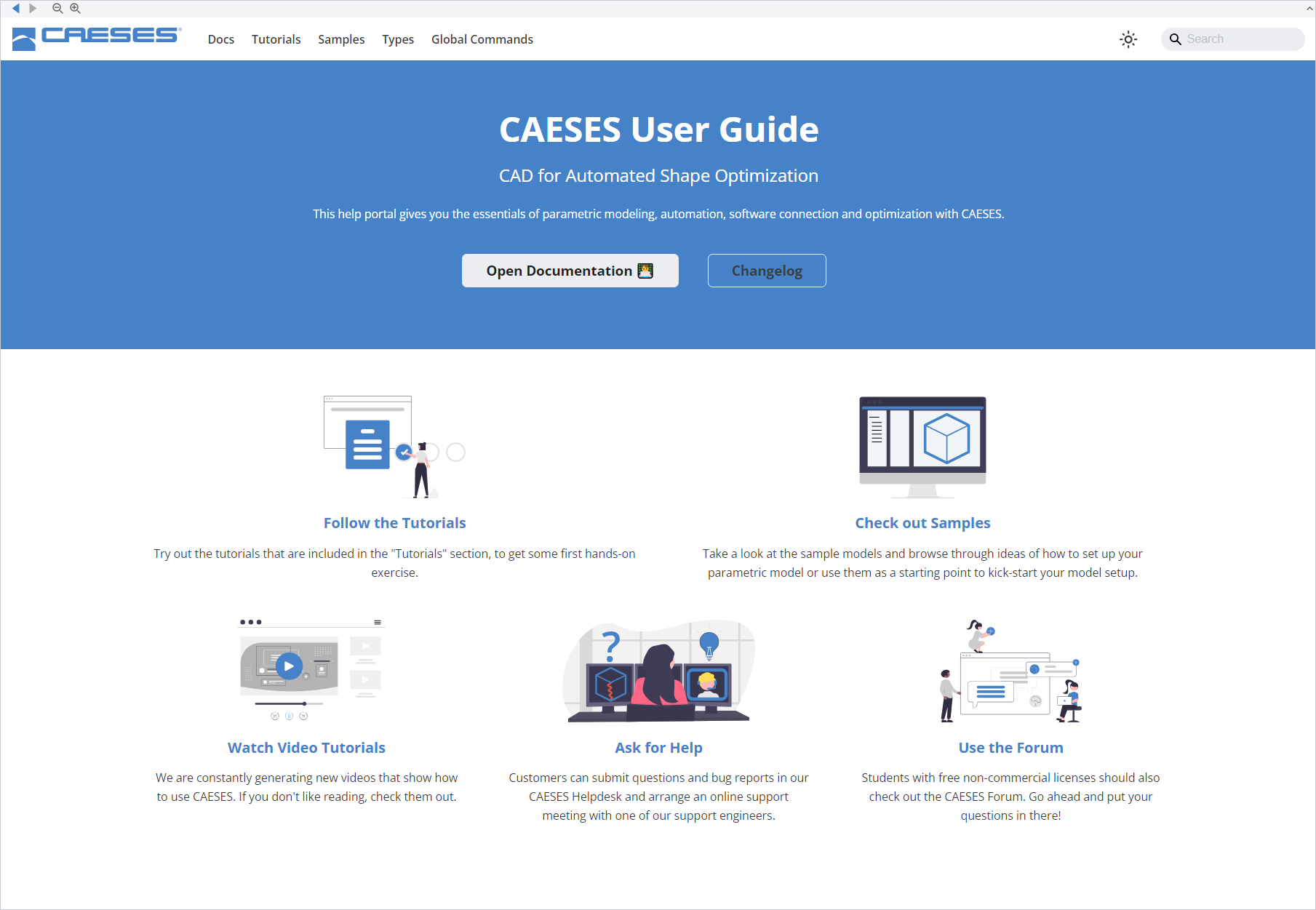
Not only has the documentation been updated and vastly expanded by new explanations, tutorials, and samples, a completely new user guide portal has been created that gives user an easier and more structured access to all available resources. This portal is naturally available in the documentation browser within CAESES, but will also be made available as a web resource online for added convenience.
And Much More
But the news don’t stop at the aforementioned headlines. Plenty of additional developments have been added that are not only limited to marine applications,
- A completely new and vastly improved selection behavior in the 3D view.
- Introduction of bounded parameters that can hold expressions as bounds. Useful for robust parameterizations, constraints, and interactive point handling.
- New procedures for smooth and accurate parametric fitting of curves.
- Robust generation of flow domains for marine applications.
- Predefined software connectors for a selection of various tools for marine applications.
- New BRep operations for closing, patterns, and extrusions.
- New transformation that generates the inverse of any given transformation.
- New context menu operations to, e.g., adjust design variables to target, add leading numbers to scopes, or create subscopes.
Check out the changes log for all details and get the latest version today!
Join the Release Webinar!
Join our release webinar on March 17, 2025, at 3:00 pm CEST and find out more about the new functionality in CAESES 5.3.
Follow Us
If you are interested in updates about CAESES®, then sign up for our newsletter. Don’t worry, we won’t bother you with too many emails. Of course, you can unsubscribe at any time :-)