Engineering data is your most valuable untapped asset

Every engineering project generates more than a finished product, it generates knowledge.
Whether you’re designing a ship hull, optimizing a turbine blade, or developing a new cooling system, every design iteration, simulation, optimization study, and engineering decision produces valuable information about how a product behaves. Collectively, these activities create a wealth of engineering data that extends far beyond the final design.
Yet, despite generating more data than ever before, many engineering organizations struggle to extract its full value. Simulation results are archived, optimization studies remain tied to individual projects, and engineering knowledge often stays with the teams, or even the engineers, who created it. As new projects begin, similar analyses are repeated, familiar design challenges are revisited, and valuable insights are rediscovered instead of reused.
This raises an important question:
If engineering organizations are generating more data than ever before, why aren’t they becoming exponentially smarter with every project?
The answer isn’t a lack of data. It’s the inability to consistently transform engineering data into reusable engineering knowledge.
As products become increasingly complex and development cycles continue to shrink, this distinction is becoming more important than ever. Competitive advantage no longer depends solely on running more simulations or evaluating more design concepts, it depends on learning more from every engineering activity.
That shift marks the transition toward data-driven engineering.
Engineering data is more than simulation results
Engineering data is often associated with simulation outputs, experimental measurements, or performance reports. While these are certainly important, they represent only a small part of the information generated throughout product development.
Engineering data begins much earlier.
It starts with the engineering model itself, how geometry is parameterized, which variables define the design, and what constraints determine the feasible design space. As development progresses, this expands to include geometry variations, simulation settings, optimization objectives, performance metrics, manufacturing requirements, and the decisions made throughout the design process.
Viewed individually, these are simply pieces of information. Together, they form something far more valuable: engineering knowledge.
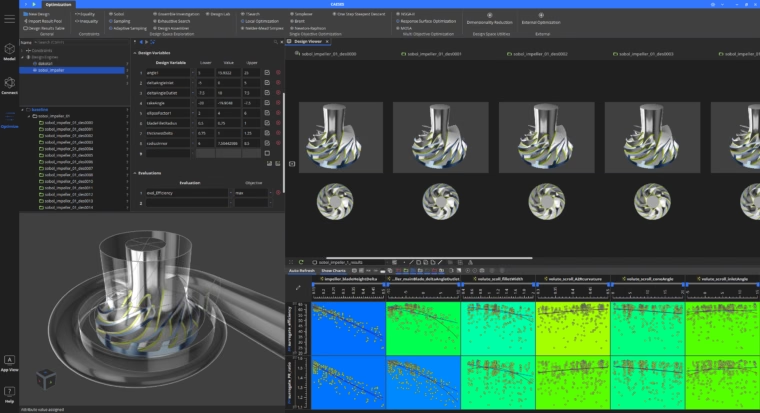
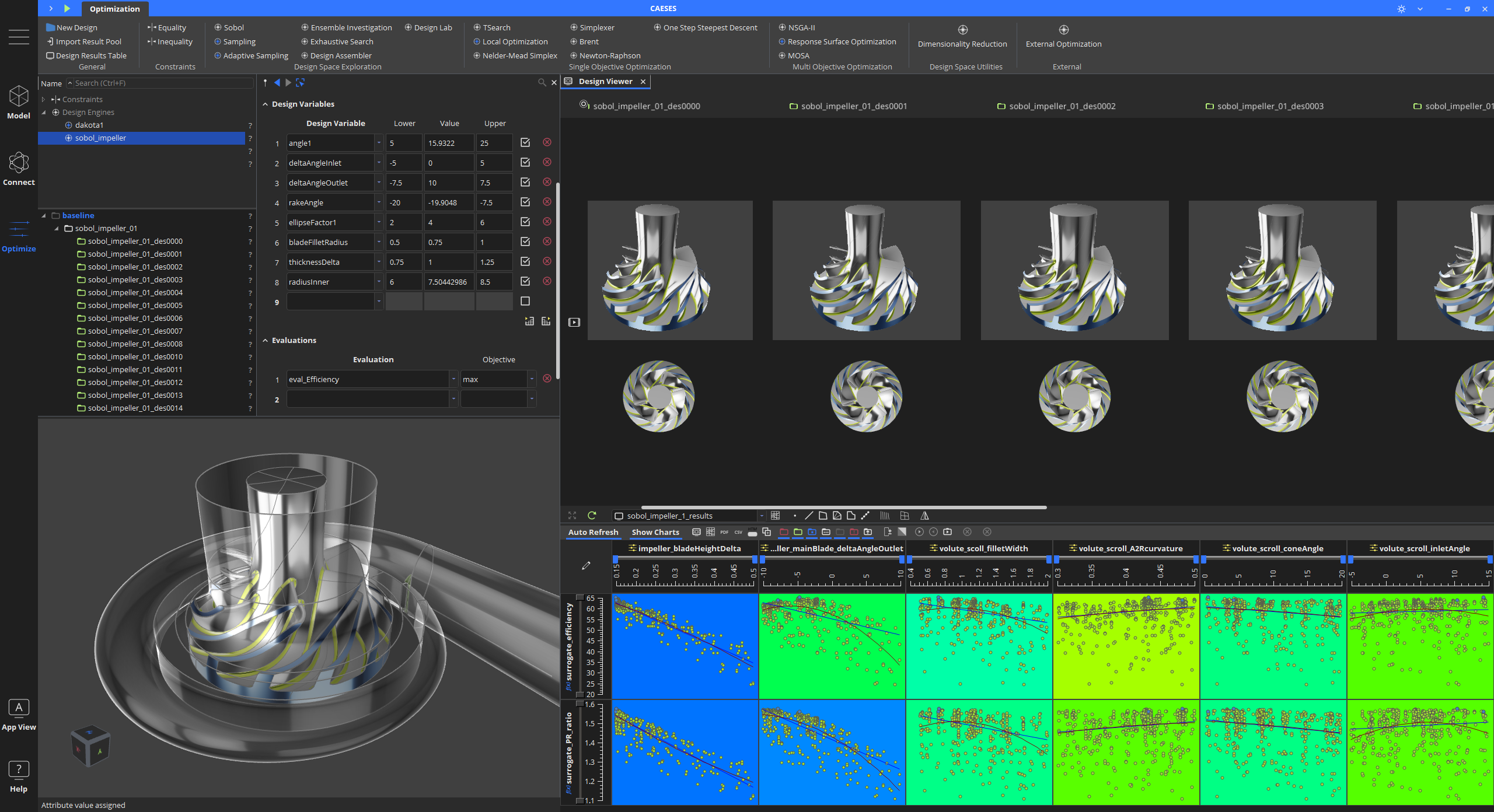
Consider a typical optimization study. The optimized geometry is often seen as the final outcome, yet it represents only a fraction of what has been learned. Hundreds or even thousands of design variants may have been evaluated along the way. Those iterations reveal which parameters have the greatest influence on performance, where trade-offs exist, which constraints primarily limit the design space, and why certain concepts consistently outperform others.
From simulation-driven design to data-driven engineering
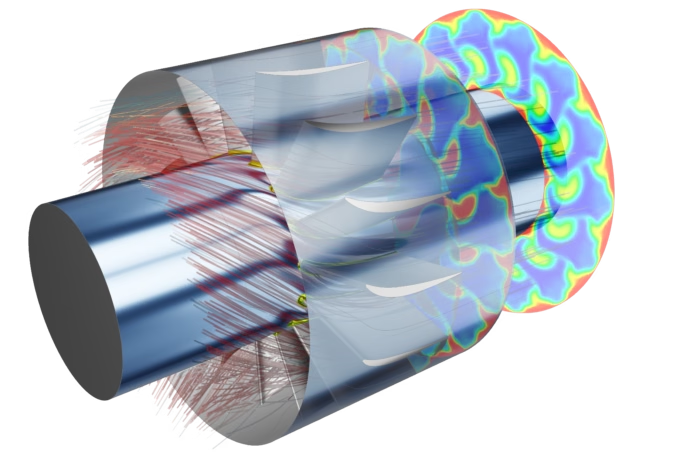
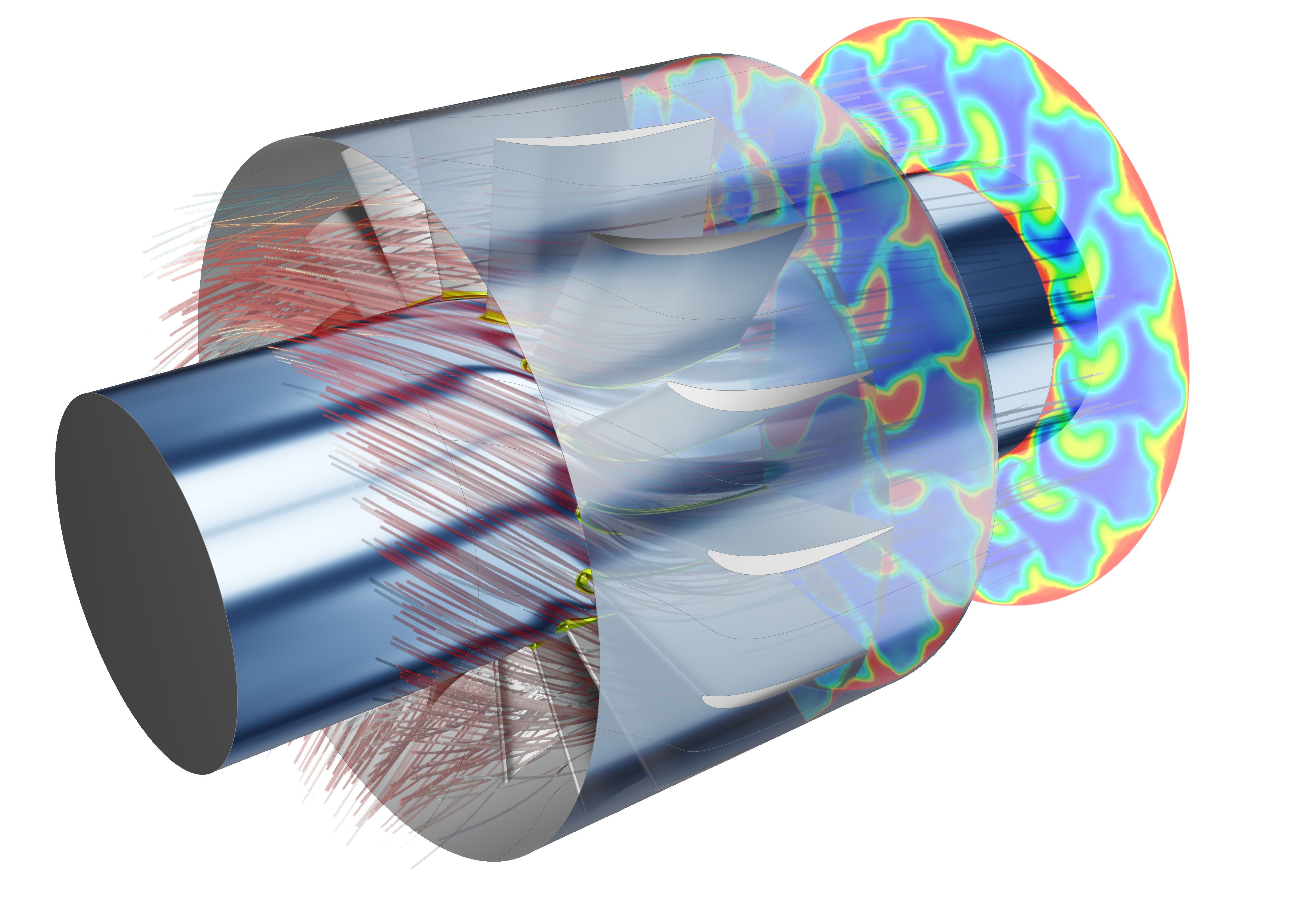
For decades, simulation has transformed engineering by reducing the need for physical prototypes and enabling engineers to evaluate product performance earlier in the design process. Simulation-driven design has helped organizations shorten development cycles, reduce costs, and build better-performing products across industries such as maritime, turbomachinery, automotive, aerospace, and energy.
But simulation alone answers only one question:
How does this design perform?
Data-driven engineering asks a different question:
Why does it perform that way?
Instead of treating simulations as isolated validation exercises, data-driven engineering views every simulation, optimization study, and design iteration as an opportunity to build engineering knowledge. Rather than focusing solely on finding the best-performing design, engineers begin to understand the relationships between geometry, constraints, operating conditions, and performance across the entire design space.
This broader perspective allows teams to identify trends, quantify sensitivities, and make better-informed design decisions much earlier in the development process. More importantly, the knowledge gained from one project becomes a valuable resource for the next.
Engineering evolves from solving individual problems to continuously improving how problems are solved.
Better engineering data starts with better engineering models
If engineering data is the foundation of data-driven engineering, then the quality of that data depends on how it is created.
Traditional CAD systems were designed primarily to define geometry for manufacturing. While highly effective for documenting finished designs, they are often less suited for robustly generating thousands of geometry variations, as required for automated design exploration and optimization.
As models become more complex, even small parameter changes can lead to regeneration failures, broken geometry, or violated design constraints. These interruptions reduce automation, limit the number of feasible design variants, and ultimately diminish the quality of the engineering data being generated.
This is why robust parameterization is so important.
A well-parameterized engineering model is more than a flexible CAD model. It captures engineering intent by defining meaningful design variables, embedding manufacturing and engineering constraints, and enabling the automated generation of simulation-ready geometry across a wide design space.
The result isn’t simply more design variants.
It’s better data that accurately reflects the relationships between design decisions and product performance, and data that can be trusted, reused, and expanded over time.
As we increasingly explore artificial intelligence and machine learning, this becomes even more critical. AI models are only as good as the engineering data they learn from. Before engineers can train predictive models or develop intelligent design workflows, they first need reliable, representative datasets generated through robust engineering processes.
In other words, successful AI begins long before the first algorithm is trained.
It begins with high-quality engineering data.
Turning engineering data into a competitive advantage
Generating valuable engineering data requires more than running simulations. It requires engineering workflows that are designed for exploration, automation, and continuous learning.
This is where CAESES enables data-driven engineering.
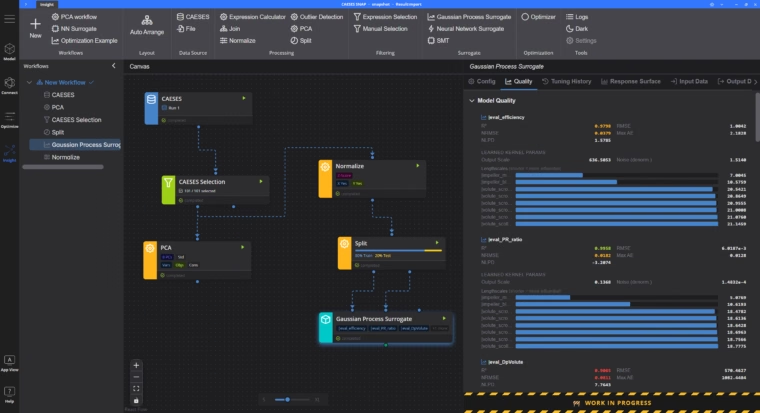
Rather than functioning solely as a geometry modeling or optimization tool, CAESES provides a platform for creating robust parameterized models, automating simulation workflows, exploring complex design spaces, and analyzing engineering data. Engineers can efficiently generate large numbers of simulation-ready design variants while maintaining engineering intent and respecting manufacturing or packaging constraints.
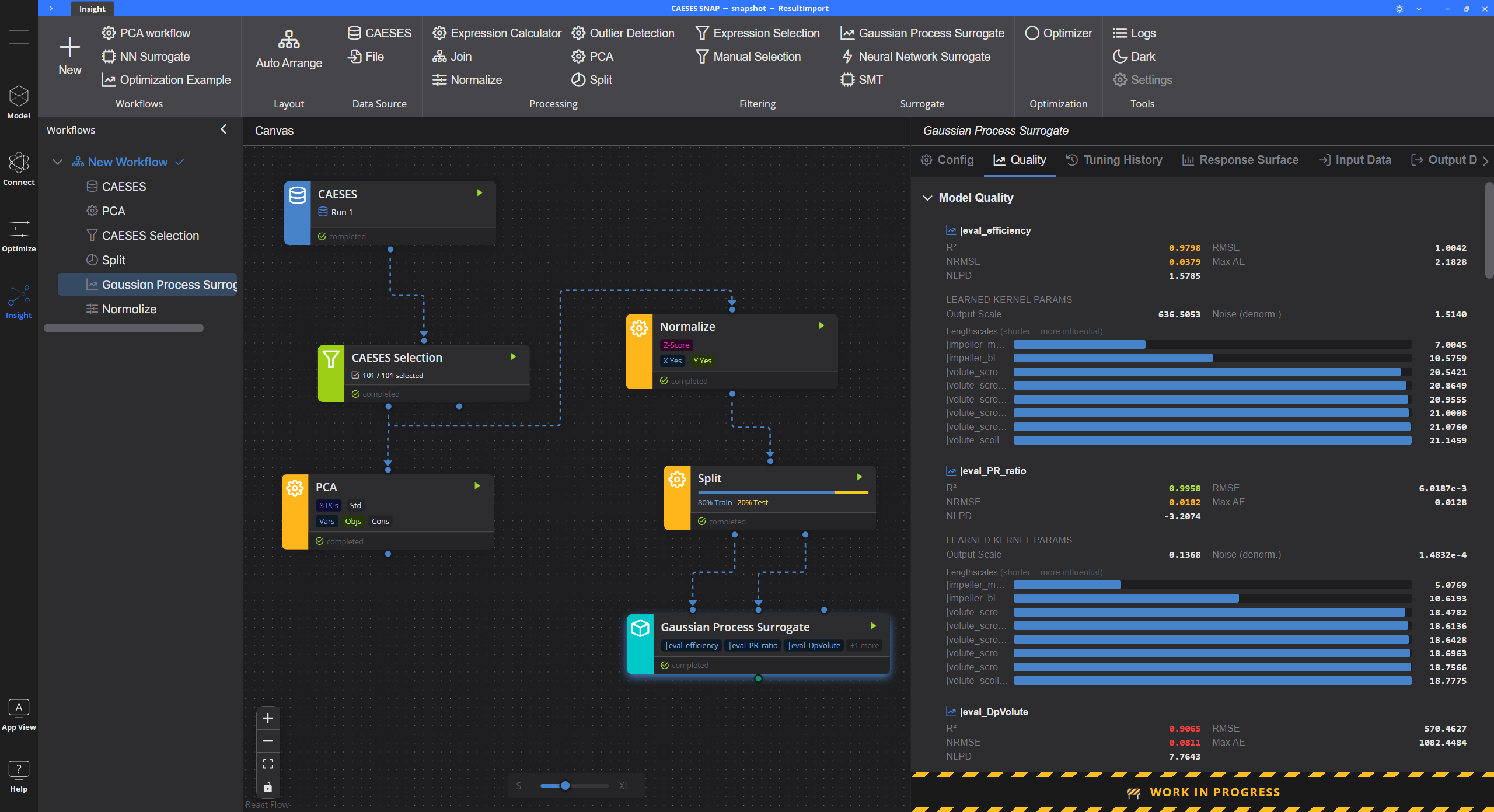
Instead of treating each simulation as an isolated result, CAESES helps transform every design study into reusable engineering knowledge. Teams gain deeper insight into how products behave, identify meaningful design trends, and build structured datasets along with predictive models that support better engineering decisions, not only for the current project, but for future developments as well.
As organizations continue their journey toward AI-assisted engineering, this ability to systematically generate and reuse engineering data will become an increasingly important competitive advantage.
Engineering data is no longer simply a byproduct of product development.
It is becoming one of an organization’s most valuable engineering assets.
By investing in robust engineering models, systematic design exploration, and workflows that generate high-quality engineering data, organizations are laying the foundation for faster innovation, more informed decision-making, and the next generation of data-driven engineering.