Optimizing propeller performance for an electric boat
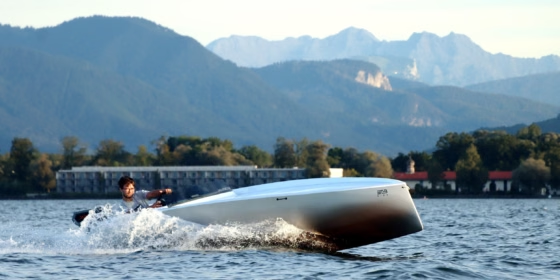
For an electric boat, propulsion efficiency is critical. With a limited power budget, improving propeller efficiency can directly increase speed, range, and overall performance.
However, propeller performance depends on more than blade geometry. The propeller operates in the hull’s wake and within the constraints of the electric motor, making the hull, propeller, and propulsion system a coupled design problem.
This was the challenge behind the ELEKTROBOOT EINS (EB EINS) project, a collaboration between Torqeedo, KAEBON, and FRIENDSHIP SYSTEMS.
The objective was to redesign the propeller of an ultra-light electric boat to maximize top speed while improving efficiency. The team combined parametric geometry modeling, Computational Fluid Dynamics (CFD), Design of Experiments (DoE), surrogate modeling, and automated optimization to develop a propeller tailored to the boat’s actual operating conditions.
The challenge: more performance without more power
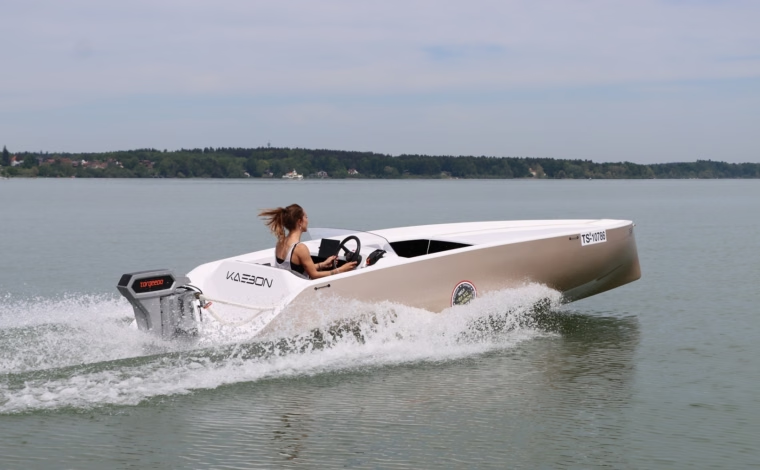
EB EINS is a lightweight electric vessel measuring 5.25 meters long and 1.7 meters wide, with an empty weight of just 89 kg and an operating weight of approximately 370 kg.
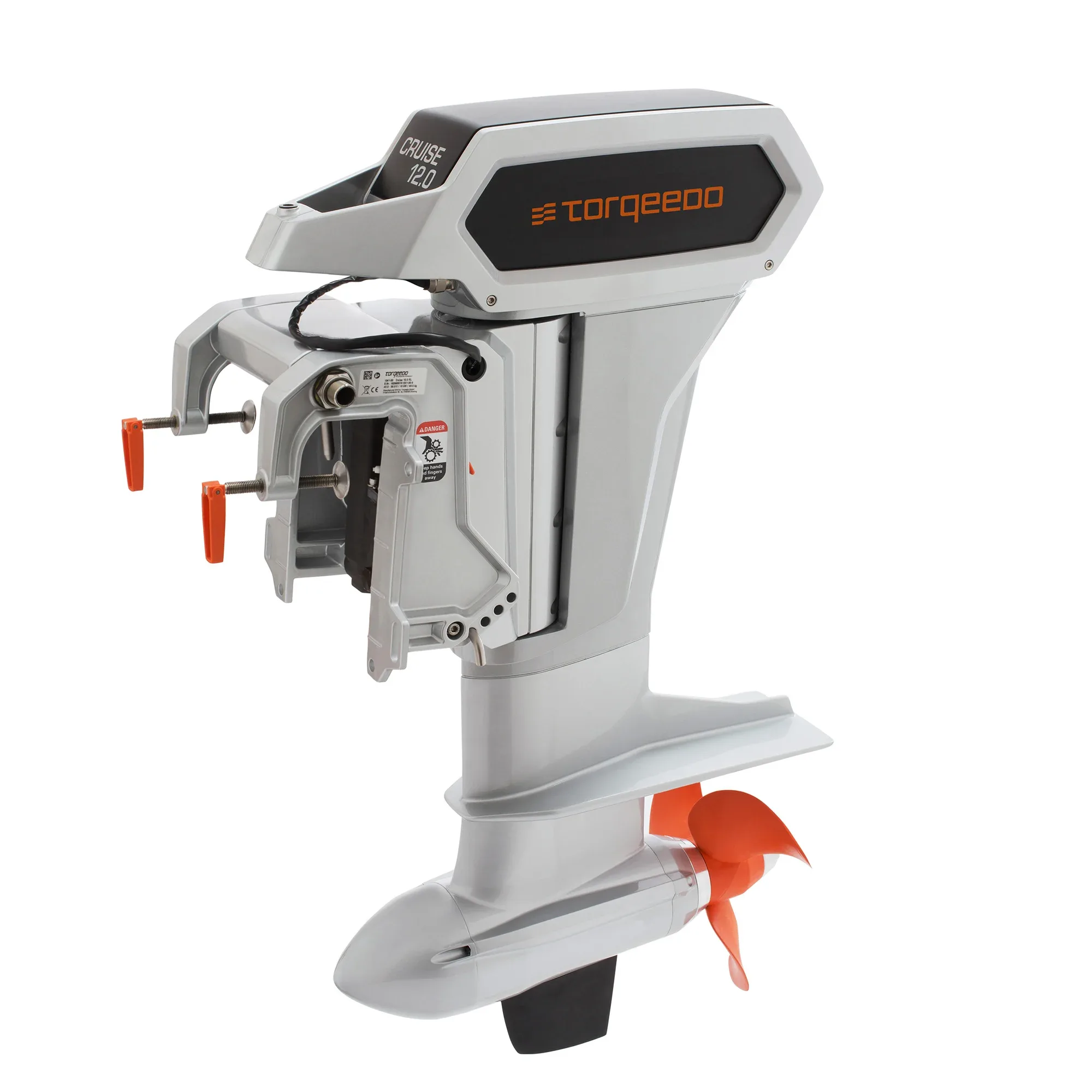
The boat is powered by a 12 kW Torqeedo Cruise 12.0 electric outboard. Including the battery system, the propulsion package weighs approximately 60 kg. The original configuration achieved a reference top speed of 27.4 km/h.
The challenge was not simply to generate more thrust. The new propeller also had to:
- operate efficiently in the boat’s non-uniform wake
- provide sufficient thrust to overcome hull resistance
- remain within the electric motor’s torque limits
- meet structural and manufacturing requirements
- perform efficiently across the relevant operating range
Meeting these requirements simultaneously made the challenge well suited to a simulation-driven optimization approach.
Understanding the hull’s hydrodynamic environment
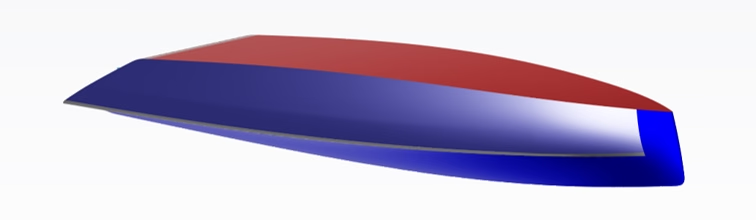
Before optimizing the propeller, the team first needed to characterize the hydrodynamic environment in which it would operate.
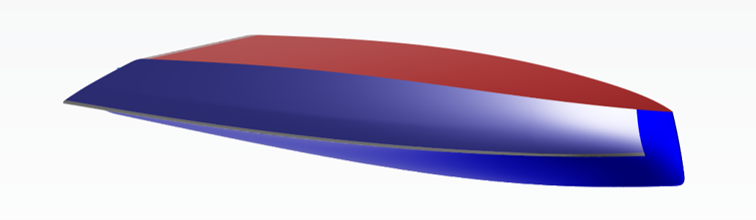
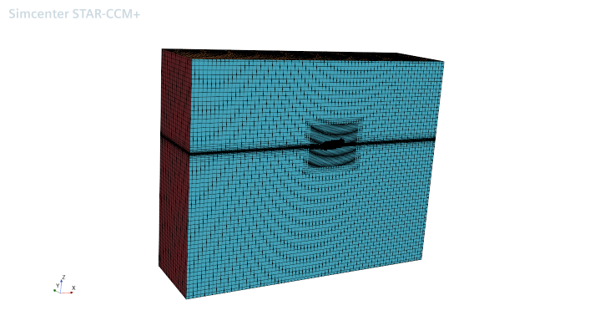
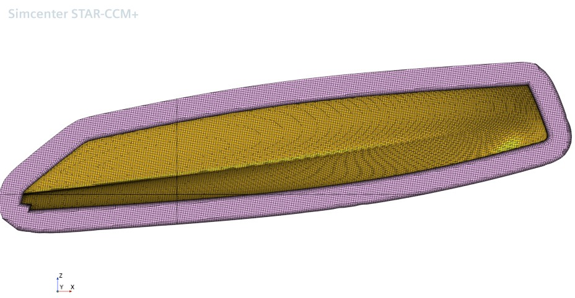
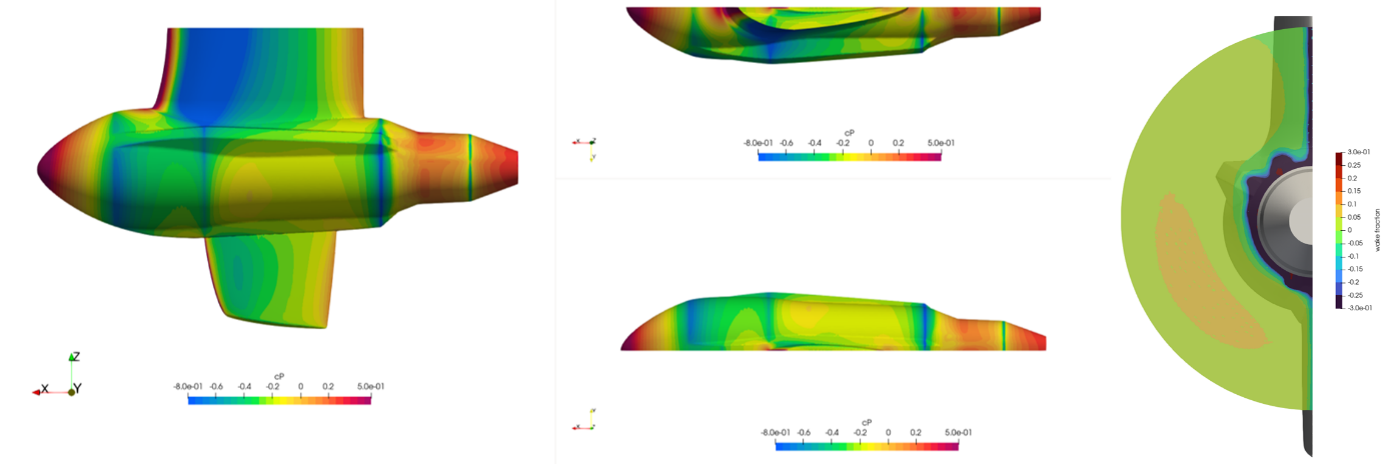
The hull geometry was prepared in CAESES as a watertight model and automatically divided into regions to support appropriate local mesh refinement. The prepared geometry was then simulated in Simcenter STAR-CCM+.
A dynamic overset grid captured the interaction between the moving hull region and the surrounding flow, while Adaptive Mesh Refinement (AMR) increased resolution around the overset region and free surface. Hull symmetry reduced the computational domain to one half, lowering computational cost.
A realizable k‑ε turbulence model with wall functions was applied, targeting a wall y+ of approximately 70 to balance computational cost and solution accuracy.
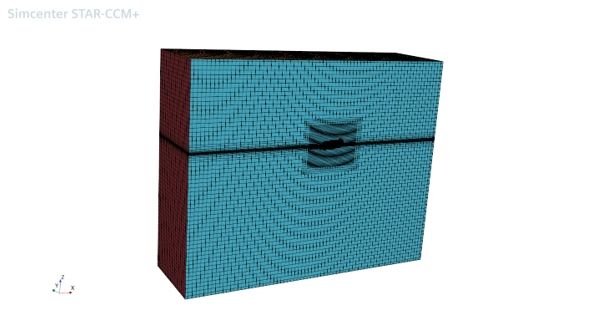
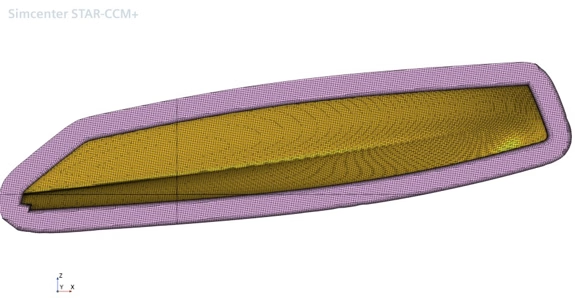
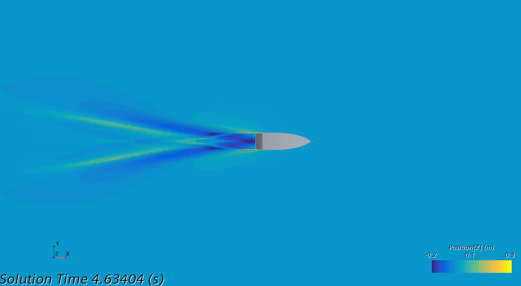
The simulations provided two key inputs for propeller design: hull resistance across the relevant speed range and the wake field behind the vessel. The propeller must generate sufficient thrust to overcome hull resistance while operating in the nonuniform inflow created by the hull.
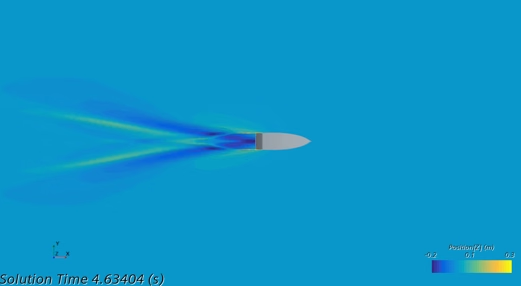
From hull CFD to propeller operating conditions
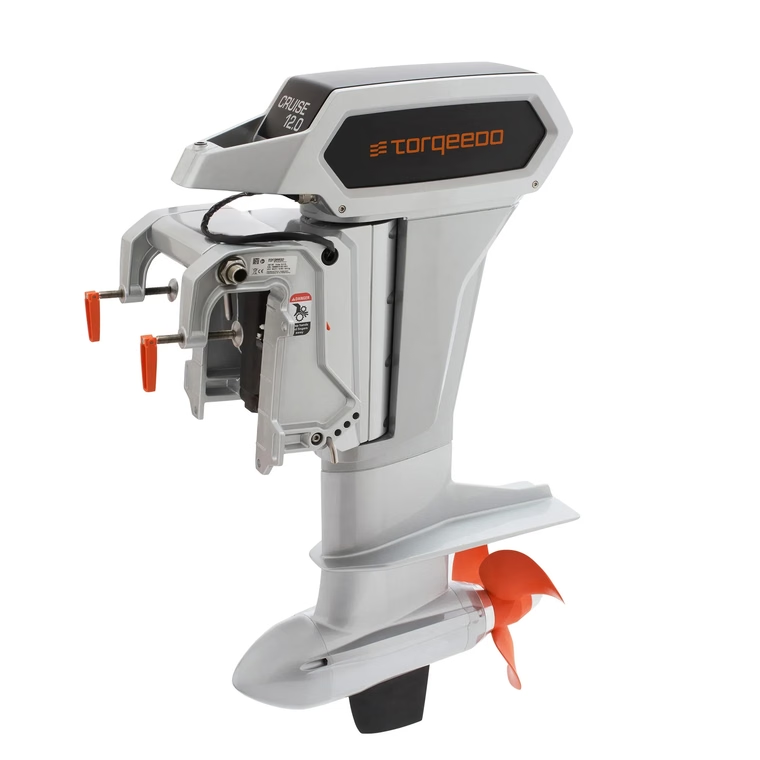
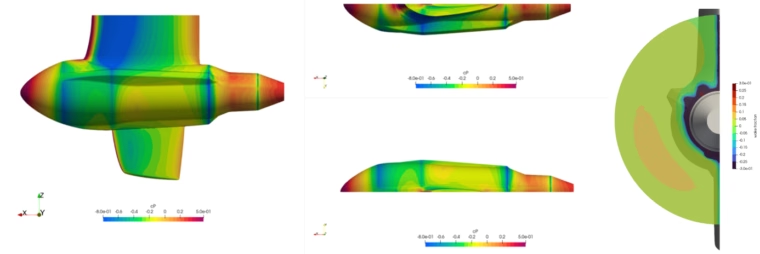
The Torqeedo Cruise 12.0 electric outboard was further characterized using OpenFOAM simulations to determine its operating conditions and provide the relevant inputs for propeller design.
Combined with the hull resistance and wake data, these results allowed the optimization to account for the complete propulsion system rather than considering the propeller in isolation.
The resulting data became key inputs for the propeller design and optimization, ensuring that the final design was matched to both the vessel’s hydrodynamic environment and the operating characteristics of the Torqeedo Cruise 12.0.
Building a fully parametric propeller
With the operating conditions established, the propeller was modeled parametrically in CAESES, enabling new designs to be generated automatically from a set of design variables.
The blade was created using a center surface modeling approach with dedicated controls for:
- tip closure
- variable radius root fillet
- minimum trailing edge thickness and
- blade thickness
The sectional geometry was based on a modified NACA 66 profile, with blade thickness defined according to ABS rules.
This parametric setup ensured that each combination of design variables generated a valid propeller geometry while maintaining geometric and manufacturing constraints.
The design problem could therefore shift from manual iteration to systematic exploration: Which combination of geometric parameters delivers the best hydrodynamic performance under the actual operating constraints?
This transition from manual design to parametric exploration provided the foundation for the subsequent simulation-driven optimization.
Exploring the design space with Design of Experiments
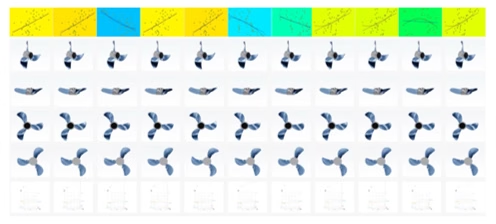
A parametric model creates flexibility but also a large design space. The propeller model contained 12 design variables. Evaluating every possible combination with high-fidelity CFD would be computationally expensive.
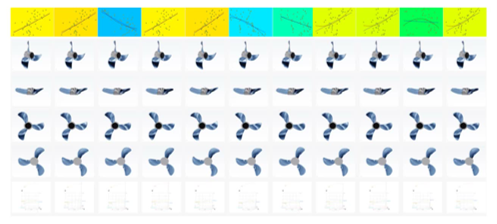
To explore the design space efficiently, the team used a DoE strategy based on a Sobol sequence, providing systematic coverage of the 12-dimensional design space.
Each candidate propeller was evaluated using CFD at 30, 32.5, and 35 km/h, together with open water conditions.
The simulations produced a dataset linking propeller geometry to hydrodynamic performance, providing the foundation for a data-driven approximation of the design space.
Replacing thousands of CFD runs with a surrogate model
High fidelity CFD provides valuable engineering insight, but evaluating every candidate during optimization would be computationally expensive.
A surrogate model was therefore built from the CFD results generated during the DoE. It captured the relationship between the propeller’s design variables and hydrodynamic performance, enabling new designs to be evaluated much faster.
Instead of:
Change geometry → run CFD → analyze results → repeat
the workflow became:
Generate CFD data → build surrogate model → explore thousands of alternatives → identify promising designs → verify with high-fidelity CFD
This marks the transition from simulation-driven iteration to data-driven engineering, where CFD-generated data enables efficient exploration of a much larger design space.
Optimizing the propeller for the electric motor
Finding a highly efficient propeller was only part of the objective. The design also had to operate within the limits of the Torqeedo Cruise 12.0 electric outboard.
Open water analyses generated thrust and torque curves for each candidate propeller. Combined with predicted hull resistance, these determined the operating point and maximum achievable speed while respecting torque limits.
Propeller geometry → thrust and torque → boat speed → hull resistance → operating point
Using the surrogate model, open water analysis, and predicted hull resistance, the optimization identified a design with a predicted top speed of 32.3 km/h.
The final propeller was designed for manufacture from EN AW 7075 aluminum alloy, providing a strong and lightweight solution.
From simulation to physical prototype
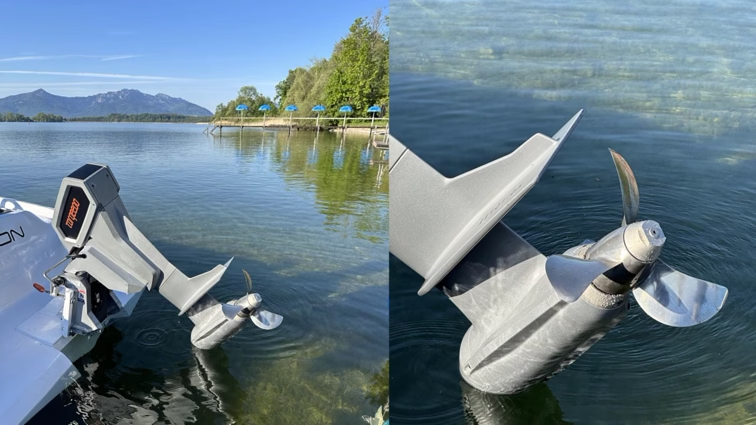
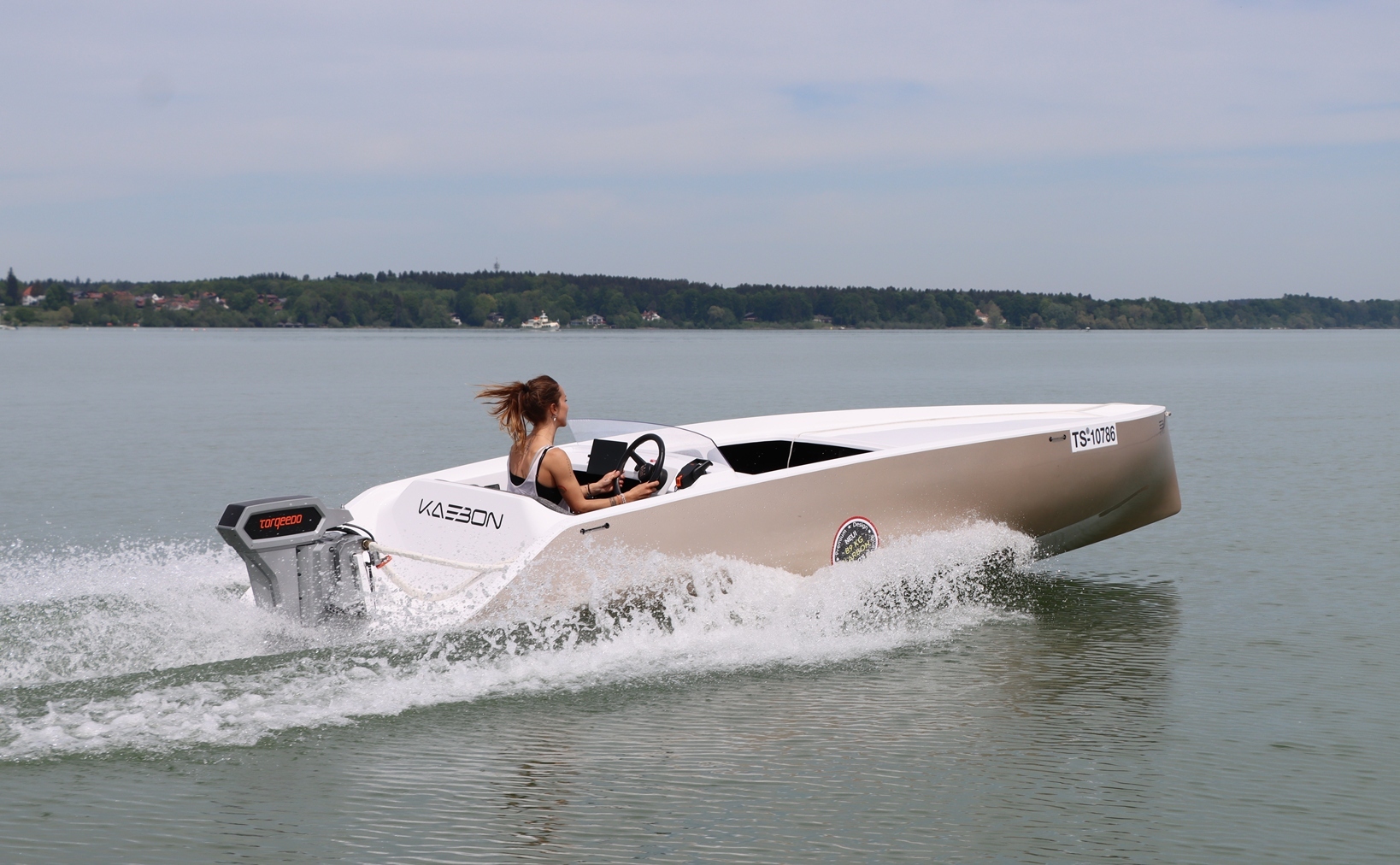
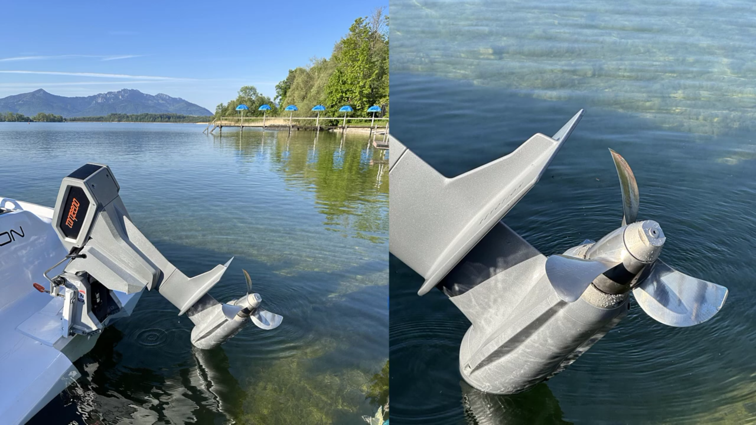
The optimized propeller was manufactured and tested on the actual boat during sea trials on Lake Chiemsee under calm conditions.
The measured top speed was 32.1 km/h, compared with the predicted 32.3 km/h, a difference of only 0.6%.
Compared with the original propeller, the optimized design improved performance by more than 15%.
The close agreement between simulation and sea trials validates the CFD-driven design and optimization workflow.
What this workflow demonstrates
The EB EINS project demonstrates the value of connecting multiple engineering methods in a single workflow:
- CFD captured the physics: Hull simulations provided resistance and wake data, while propeller simulations evaluated hydrodynamic performance.
- Parametric modeling automated geometry generation: The CAESES model generated propeller variants directly from design parameters.
- DoE structured the design exploration: Sobol sampling efficiently covered the 12-dimensional design space.
- CFD data enabled surrogate modeling: Simulation results captured the relationship between geometry and hydrodynamic performance.
- Optimization connected the system: Propeller performance, hull resistance, and Torqeedo Cruise 12.0 operating limits were considered together to identify the best design.
- Physical testing validated the workflow: Sea trials confirmed the simulation-driven prediction, with only a 0.6% difference in top speed.
This keeps the important physics → geometry → DoE → data → optimization → validation story but removes quite a bit of repetition.
From simulation-driven design to data-driven engineering
The EB EINS project highlights a broader shift in engineering design. Traditionally, simulation is used to evaluate individual designs through repeated cycles of geometry modification, simulation, and analysis. As the number of design variables increases, however, this approach becomes increasingly inefficient.
Parametric modeling changes this process. Automatically generated geometries and simulation results can systematically populate the design space, providing the data needed to build surrogate models and guide optimization.
Simulation, therefore, moves beyond answering:
“How does this design perform?”
to:
“What can we learn from the entire design space, and which design should we explore next?”
This is a key principle of data-driven engineering. By connecting parametric geometry modeling, CFD, simulation data, surrogate modeling, and optimization, engineers can move from evaluating individual designs to systematically exploring and learning from the entire design space.
The EB EINS project demonstrates this approach in practice. The optimized propeller achieved a predicted top speed of 32.3 km/h and a measured speed of 32.1 km/h, delivering more than 15% higher performance than the original design. More importantly, the project shows how simulation data can become reusable engineering knowledge, enabling faster exploration, optimization, and decision-making.