Axial Fan Noise Reduction: How To Boost It With Smarter Geometry Models
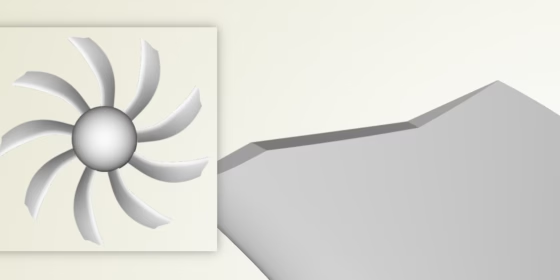
The design of axial fans typically considers the efficiency but also the reduction of noise. Axial fan noise reduction is a rather huge and complex topic when it comes to all the details, but there are a few simple geometry techniques that you can apply to your standard blade designs, to immediately lower the fan’s noise level.
The CAD and optimization solution CAESES gives you the toolbox to implement any kinds of such features, and lets you automate the blade geometry generation within CFD-driven optimization loops. This short article gives you a quick idea of what you can do with CAESES, to improve the axial fan noise level and the overall acoustic behavior.
Axial Fan Noise Reduction: Beveled Blade Tips
A beveled blade tip is one geometric feature that can immediately reduce the rotor-stator interactions and hence reduces the noise level of the axial fan. Basically, you cut out some parts at the tip region of your blade. Your parametric model needs to have controls for the shape and the depths of these different tip features, to create a variety of design candidates in an automated process.

Beveled blade tips of an axial fan (click to enlarge)
Trailing Edge Serrations
Another geometrically simple thing is to cut out parts of the trailing edge, to influence how the flow from the suction and pressure side are mixed into each other. By having an improved transition of the two flows, you can reduce the turbulence patterns, which results in an improved efficiency and a further noise reduction. You would also introduce controls (design variables with lower and upper bounds) e.g. for the shape of these serrations, their locations, as well as for the number of serrations.

Serrations for the trailing edge
Axial Fan Noise Reduction: How To Find the Optimal Geometry
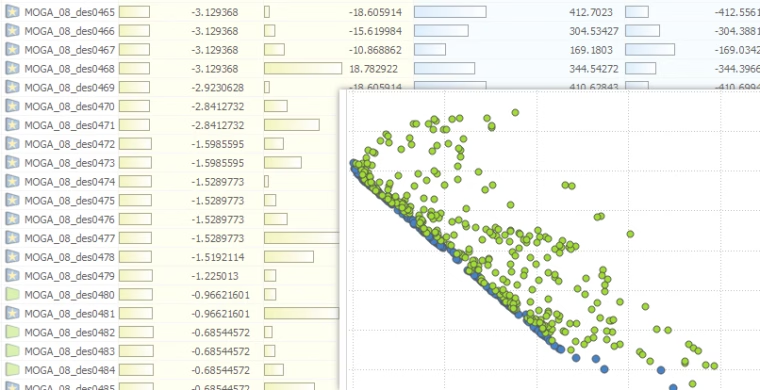
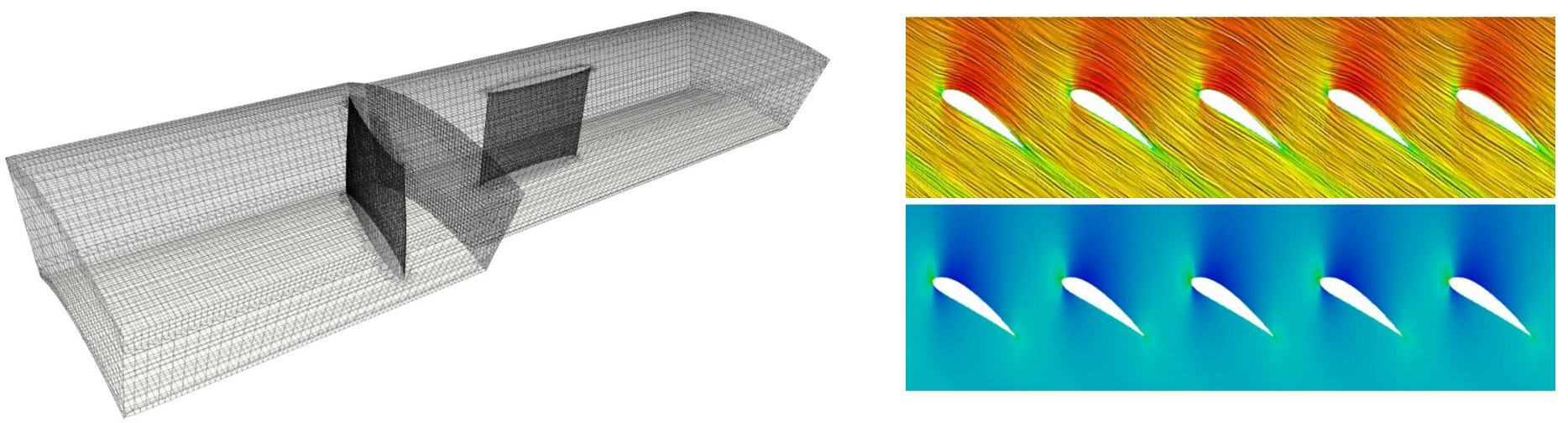
In order to find the optimal parameters for the beveled blade tips and the vortex controls at the trailing edge, you typically run design explorations and shape optimizations with simulation tools, in particular with CFD. In such a multi-objective procedure, the blade’s shape parameters are varied automatically, while the optimization strategies try to improve the efficiency and the noise emissions. The simulation tools are also connected and automated, to automate the entire meshing and analysis process.
More Information
See the turbomachinery section for more information about blade design in the context of simulation-driven studies. The case study “Axial Fan Optimization Using TCFD and CAESES” gives you an example of coupling CAESES and TCFD for optimizing an axial fan (in this case without taking into account axial fan noise reduction features).
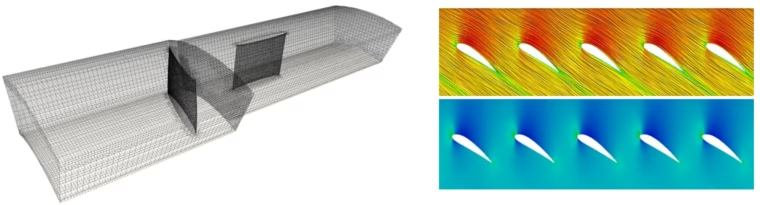
Automation of the axial fan meshing procedure and the CFD analysis
CAESES is a specialized CAD solution for the advanced and automated design of complex shapes with CFD. There are many other features that you can integrate into your blade model. CAESES is no black box, and allows you to quickly consider all your ideas in an optimization process.

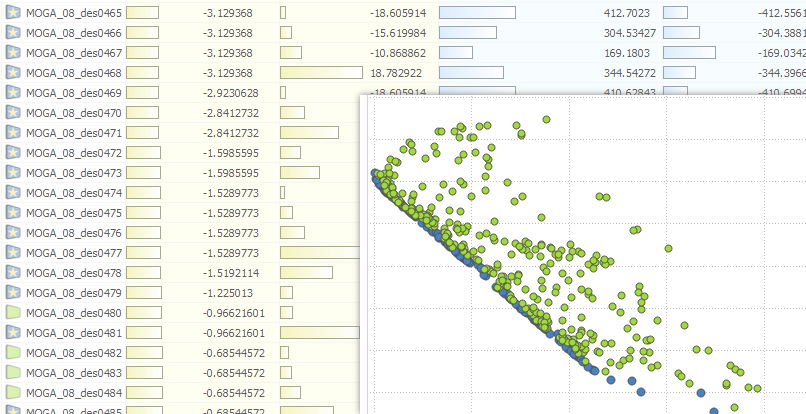
Consider any kinds of complex surface features for improving the flow
Subscribe Newsletter
Do you like this post about axial fan noise reduction? Then sign up for our CAESES newsletter!