New Publication on Simulation-Driven Design of a Fast Monohull
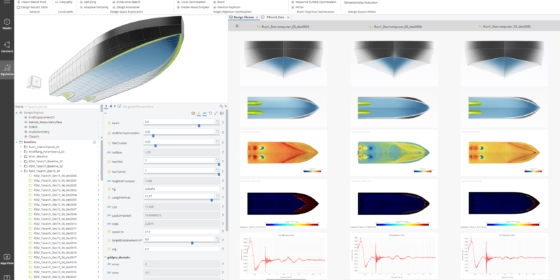
Check out our latest publication on ‘Simulation-driven design of a fast monohull’ that is publicly available for you to read.
A fast monohull was designed and optimized, using CAESES for parametric modeling and optimization coupled to STAR-CCM + for free-surface RANS simulations. The boat is a 9.5ton pilot boat, featuring tunneled propellers, shafts, and rudders. The geometry of the bare hull and tunnel were varied during the optimizations, using fully-parametric CAESES models.
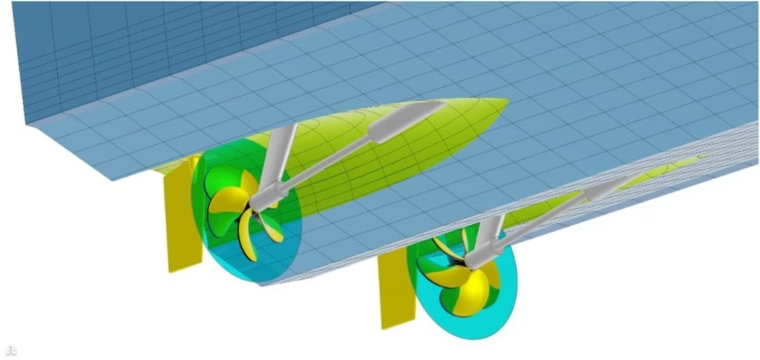
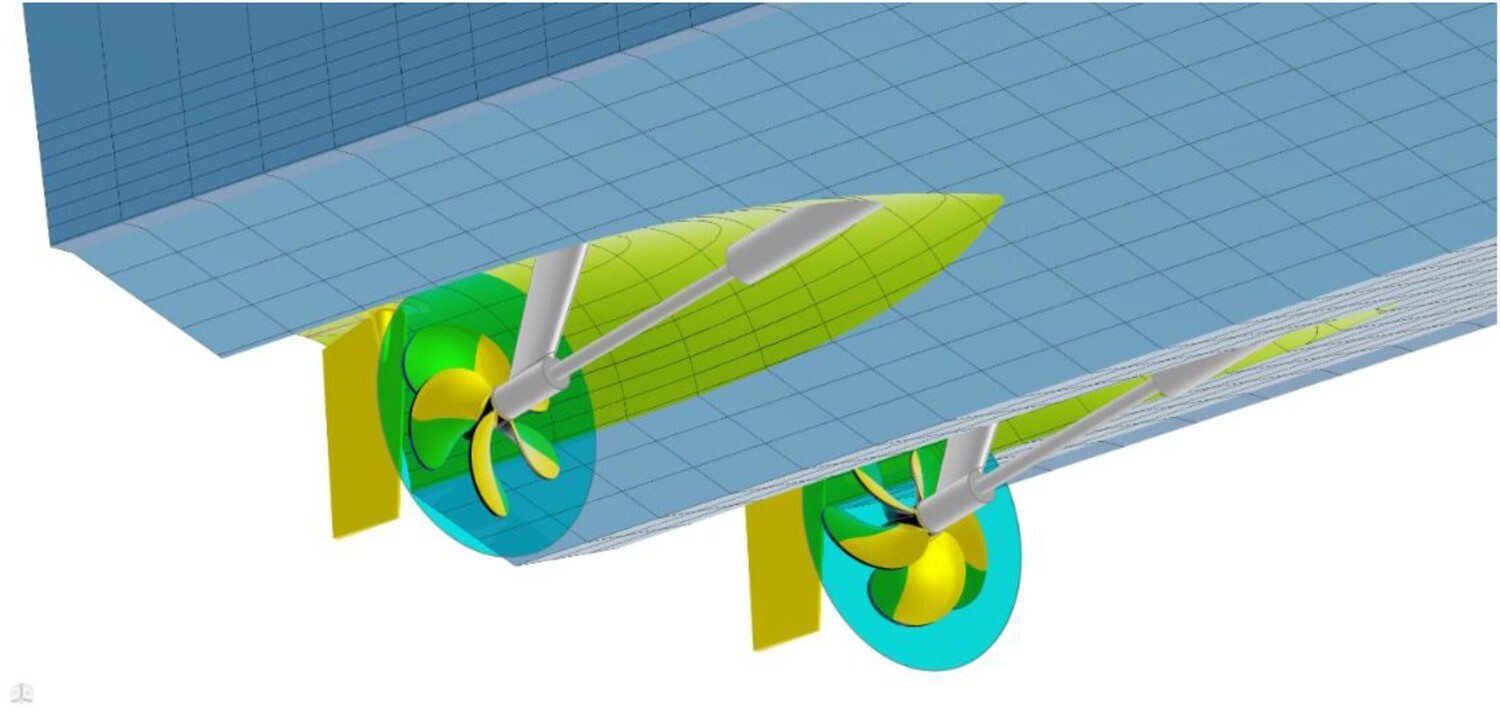
Aftbody of the pilot boat with tunneled propellers, shafts and rudders
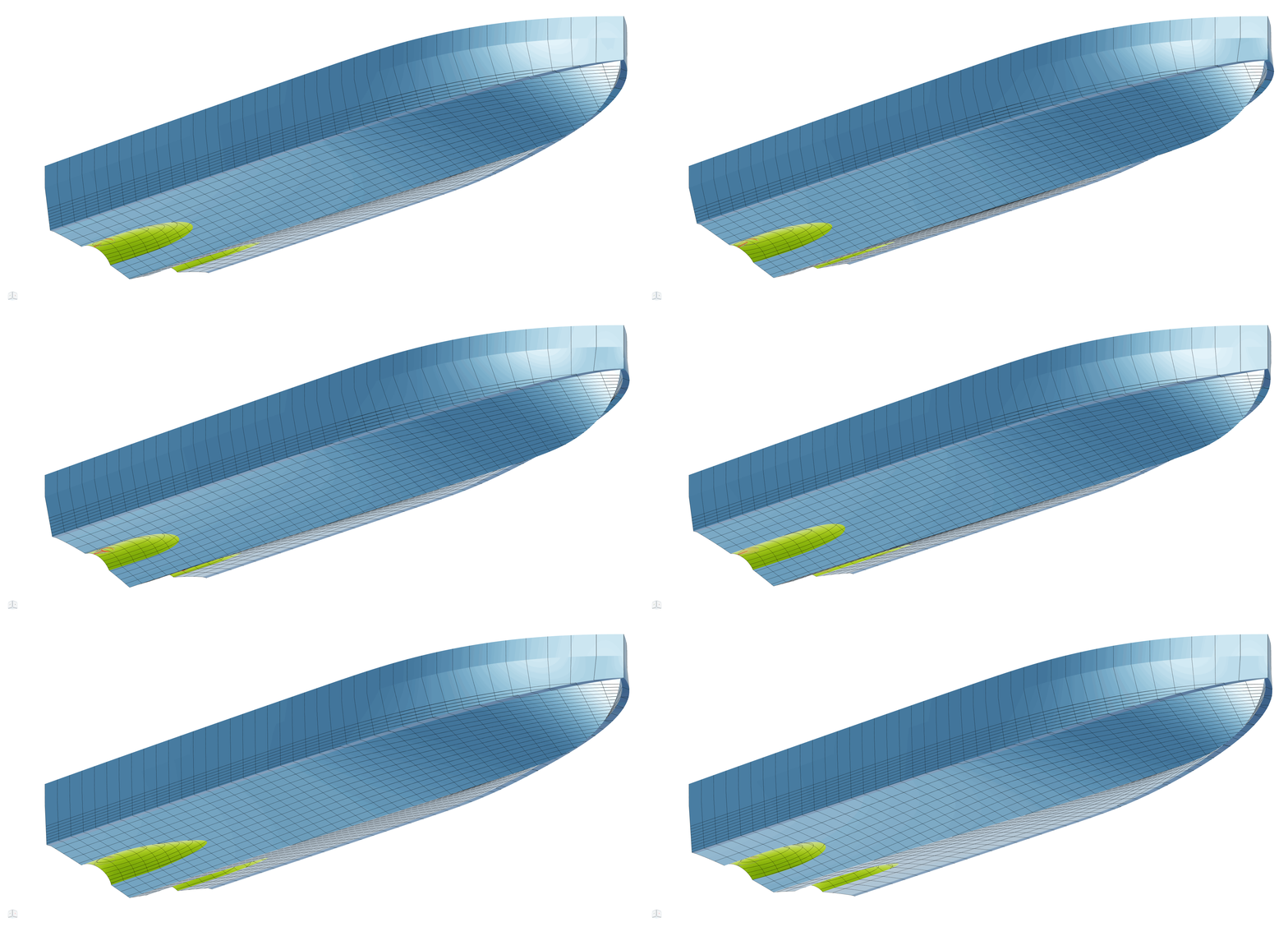
Bare hull and tunnel variation
The optimizations of the bare hull with tunnels were undertaken for thrust at the design speed of 27.5kn. The boat was free to trim and rise, utilizing an overset grid for high resolution and acceptable turn-around time.
A systematic comparison of numerical and experimental data was undertaken. The experiments were conducted with the high-speed carriage at TU Berlin, using a 3.5m fully-appended self-propelled model. The optimizations comprised Design-of-Experiments, deterministic searches, surrogates, and global strategies. Substantial improvements were found with variants being more energy-efficient than a representative baseline. The paper discusses modeling, simulations, and optimizations along with selected results.
Special Issue of Ship Technology Research
Read the published Special Issue of Ship Technology Research here: