Jet Impeller Optimization for an Electric Hydrofoil Surfboard (efoil)
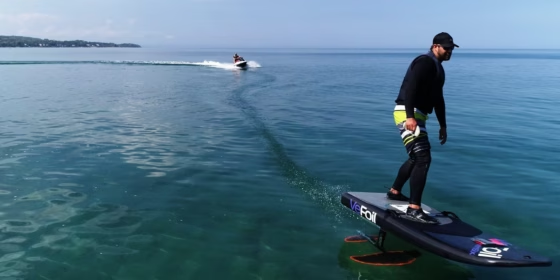
An electric hydrofoil surfboard (efoil) is a great experience if you want to try out new things that are related to surfing or kiting. Ve Concepts Inc. (AKA VeFoil) has been working on something new and unique for the efoil vessels and sport with the focus on propulsion safety. Chris Vermeulen approached us for help with impeller design and optimization, to boost efficiency and thrust while keeping the overall impeller diameter size small.
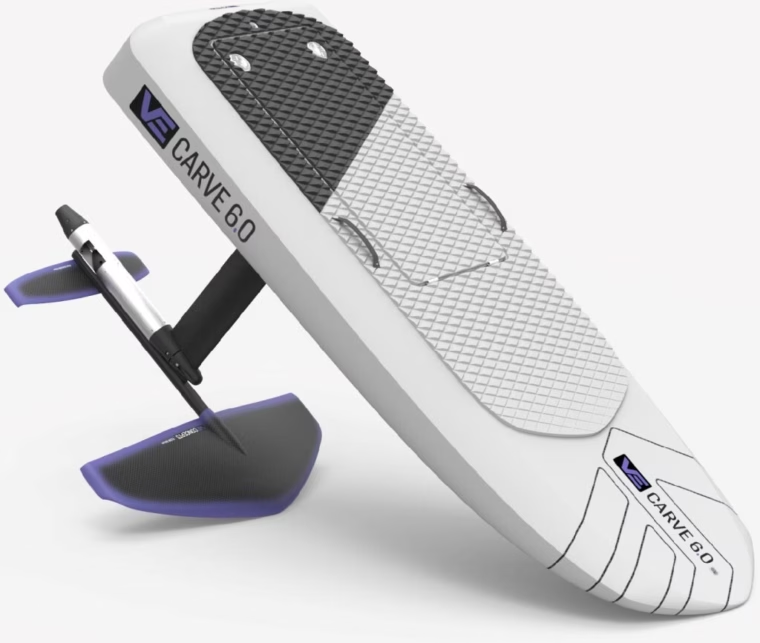
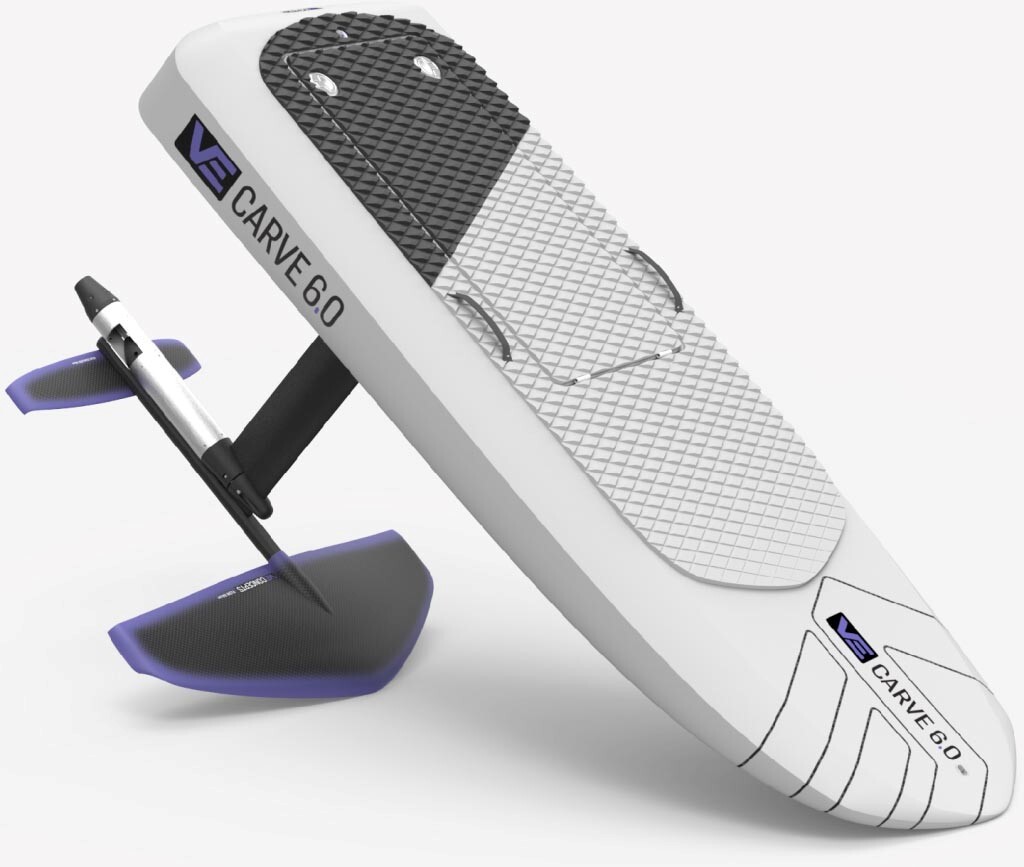
VeFoil prototype board CARVE 6.0
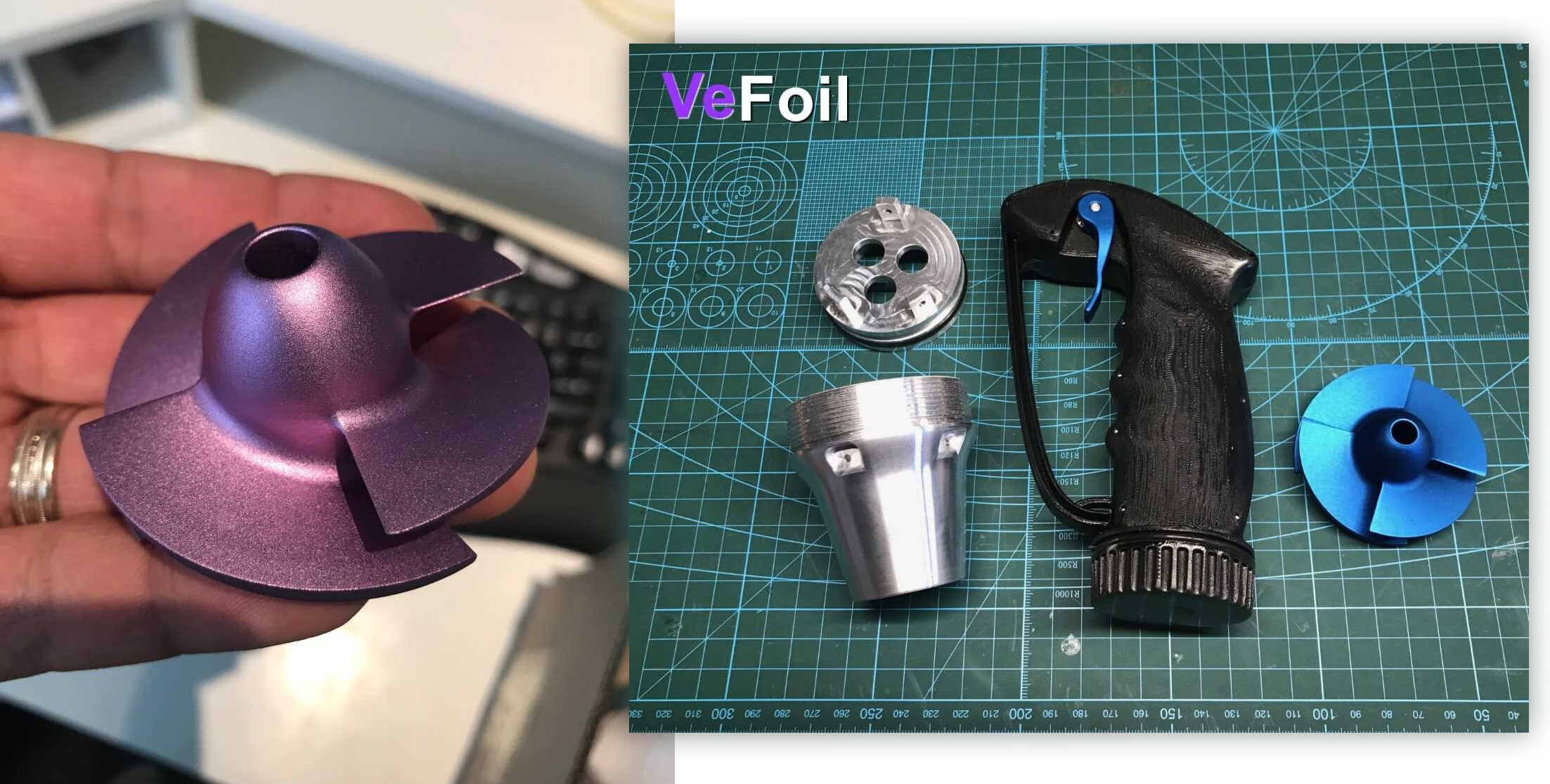
Chris’ unique focus on safety led him to design a jet-powered efoil where the impeller is completely enclosed within the motor housing which eliminates the risk of touching, kicking, or falling in the propeller blade. The following pictures show the impeller and the housing components, as well as the control that the rider uses for the speed:
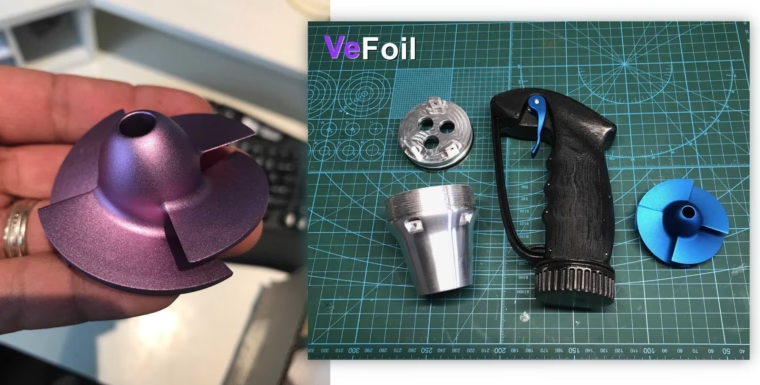
Impeller, housing and control of the VeFoil electric hydrofoil surboard
His compact jet drive reduces parasite drag generated by larger units utilizing ducted propellers. What makes the VeFoil product so interesting is that a user can ride out and into swells and foil without the use of the motor for a true hydro foiling experience. Power free hydrofoiling also extends the ride time because constant power is not required. Here is a YouTube clip of his prototype board in action:
Parametric Design and Optimization of eFoil Jet Impeller
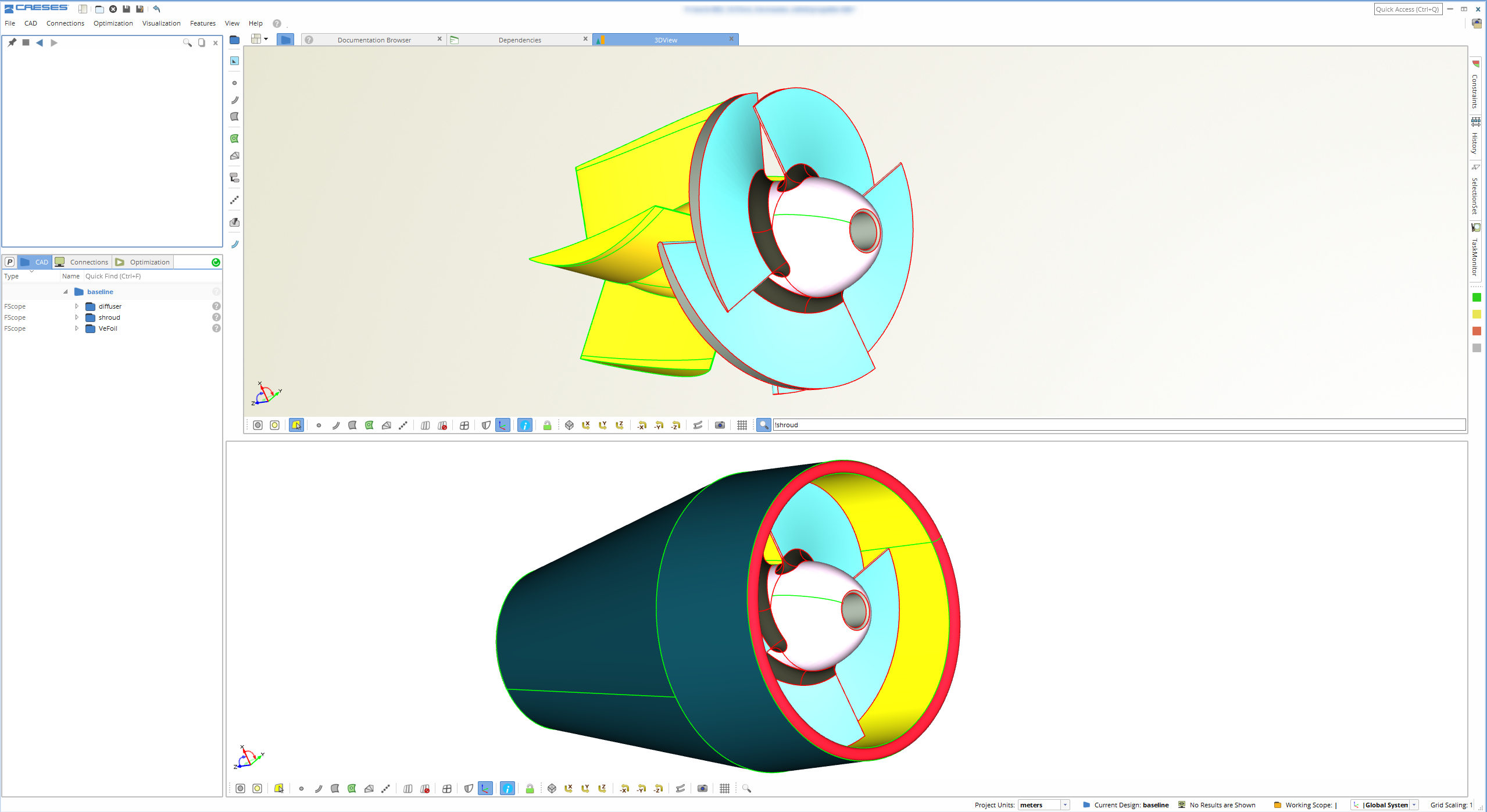
In order to optimize the impeller geometry of the electric hydrofoil surfboard, a fully parametric model of it was created in CAESES. Based on an existing impeller geometry from our model pool, the baseline design was quickly remodeled as a starting point for the optimization procedure. CAESES provides modeling capabilities for all sorts of blades and impellers, and for connecting these variable models to simulation codes.
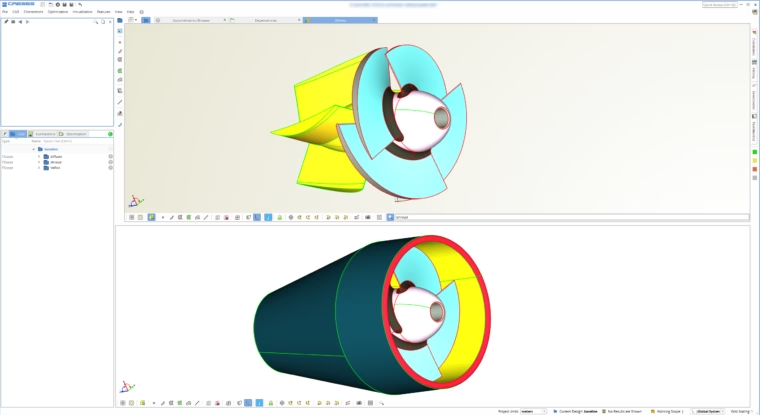
Parametric design of the VeFoil impeller in CAESES, ready for optimization
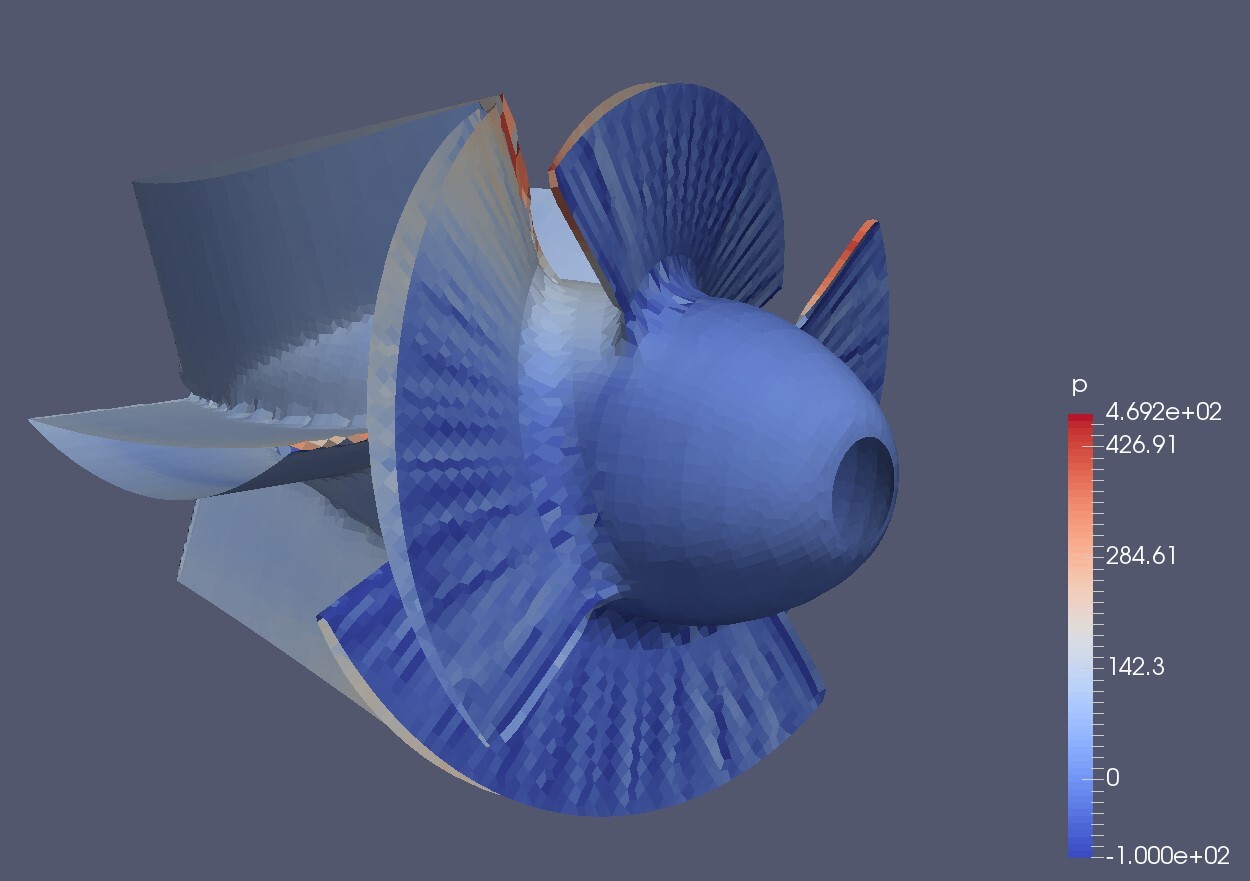
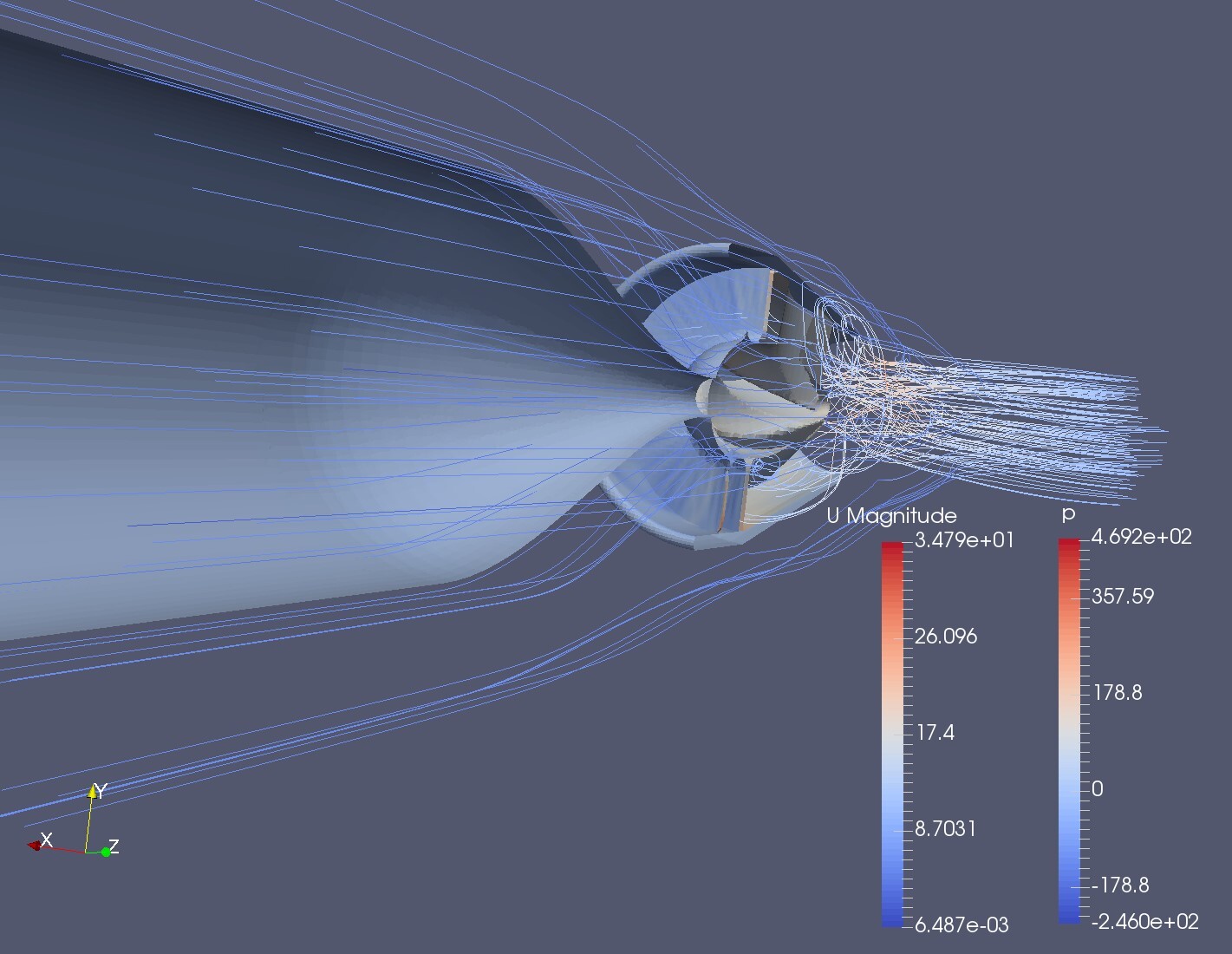
In order to create a variety of different impeller shapes, a set of design variables was defined. They controlled parameters such as the chord lengths, pitch angles, rake values etc. By automating the design creation and the corresponding simulation process, one can readily use the integrated optimization strategies in CAESES for running design explorations. For the simulation part, an OpenFOAM setup was linked to CAESES and helped to analyze the performance of the impeller. During the optimization, the pressure and torque values of the generated designs were monitored. Finding the optimal design was finally done through matching a target torque and RPM value, while maximizing the thrust.
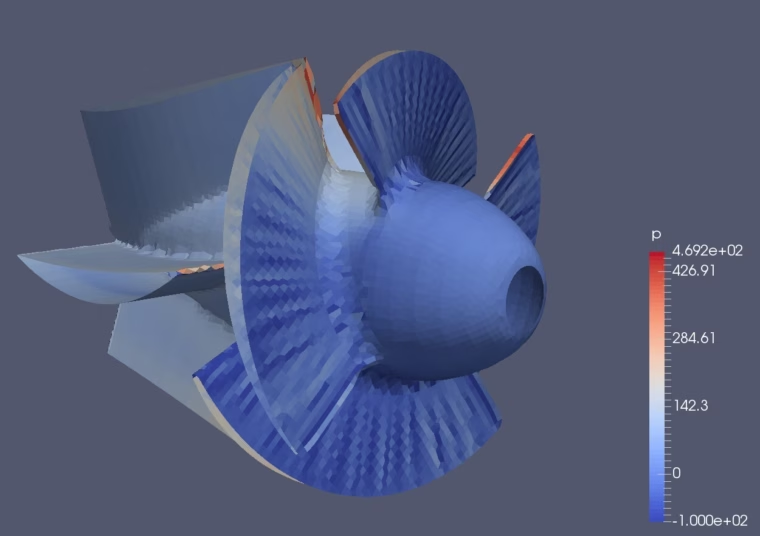
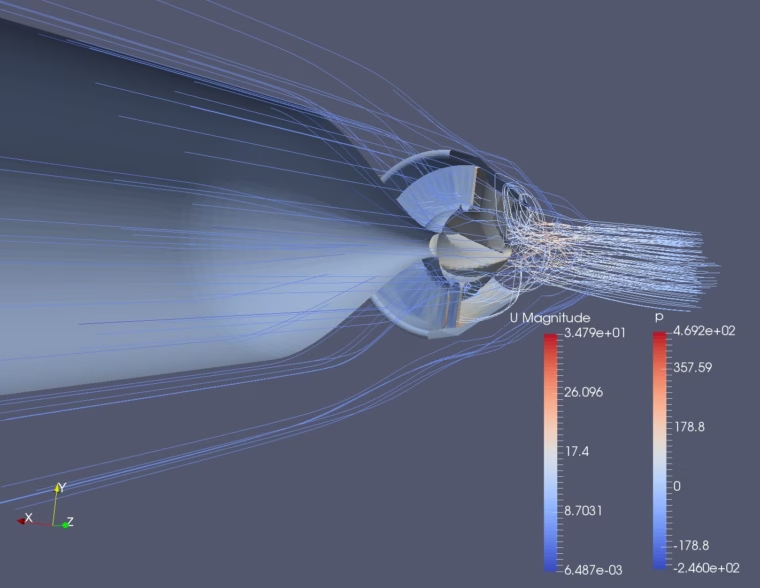
Optimization Results
The results were a surprise to everyone, i.e. to Chris who was hoping for rather small improvements through this optimization, but also to our team since we have no track record and experience in optimizing hydrofoil boards. This is what happened:
- The power consumption of the efoil under the same tests dropped whopping 26.6%, completely related to this impeller optimization.
- His efoil also increased its top speed to over 35 km/h from 25 km/h.
This is an amazing step forward in the product development process of this efoil, while setting up the optimization took just a few hours. So, the entire CAESES team is now also eager to test the new prototype in the next months: Chris, we are waiting for the invitation to join your tests in Hawaii ;-)
About Chris Vermeulen
Chris Vermeulen is an entrepreneur, pilot, stock trader, and quasi-mechanical engineer. He has built several interesting things from taser/stun gun, motorbike w/sidecar, and floating sand dredge to name a few. His passions are kiteboarding, spear spearfishing and riding electric hydrofoils.


Related Posts
There is a related blog post about generating propeller blades for another efoil surfboard. Check out the applications section for other impeller and propeller applications.