Simulation- and data-driven volute design
Explore and optimize volute geometries through parametric geometry variation, automated simulation workflows, and multidisciplinary design studies.
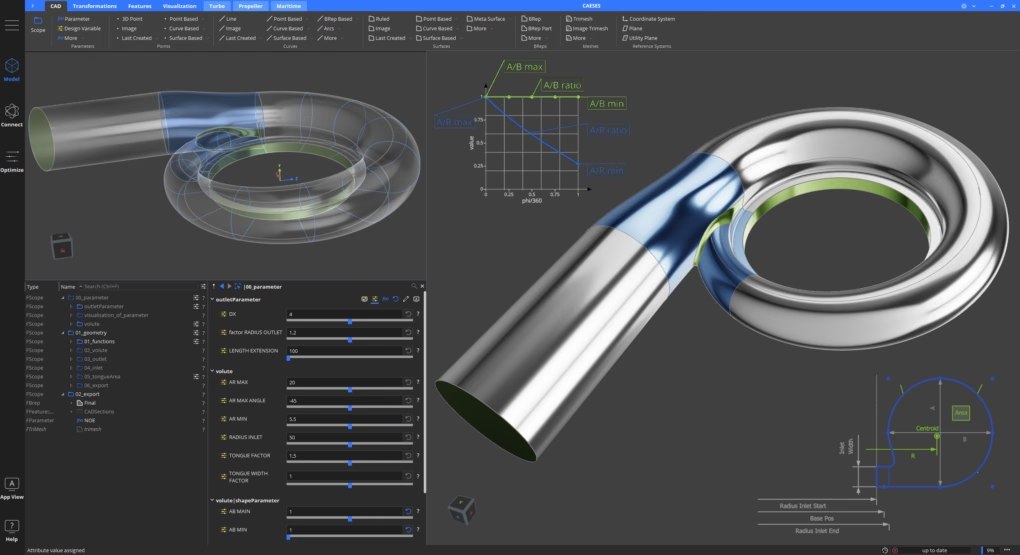
Why choose a simulation- and data-driven design approach?
Accelerated exploration of design alternatives
Simulation-driven design enables engineers to evaluate a wide range of volute geometries virtually, rapidly identifying configurations that best meet performance objectives. This significantly reduces development time while enabling a more comprehensive exploration of the design space.
Improved flow distribution and overall performance
Simulation-based optimization helps refine the volute geometry to achieve more uniform flow distribution, lower pressure losses, and better matching with the impeller or diffuser. The result is higher aerodynamic efficiency and improved overall turbomachinery performance.
Deeper insight into complex internal flow behavior
High-fidelity simulations reveal flow features such as separation, recirculation, secondary flows, and regions of high loss within the volute. These insights enable engineers to make informed design decisions and develop more efficient and robust flow passages.
CAESES’ volute design capabilities
CAESES is a specialized CAD and automation tool for optimizing complex, performance-critical geometries, with some dedicated capabilities that make it particularly suited for the design of cutting-edge volutes.
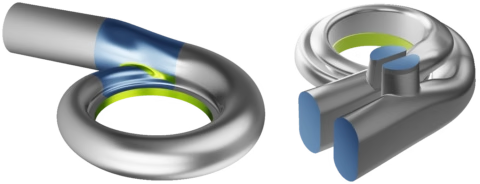
Smart parametric modeling
Modeling of any type of volute: pump, compressor and turbine volutes, twin and double scroll.
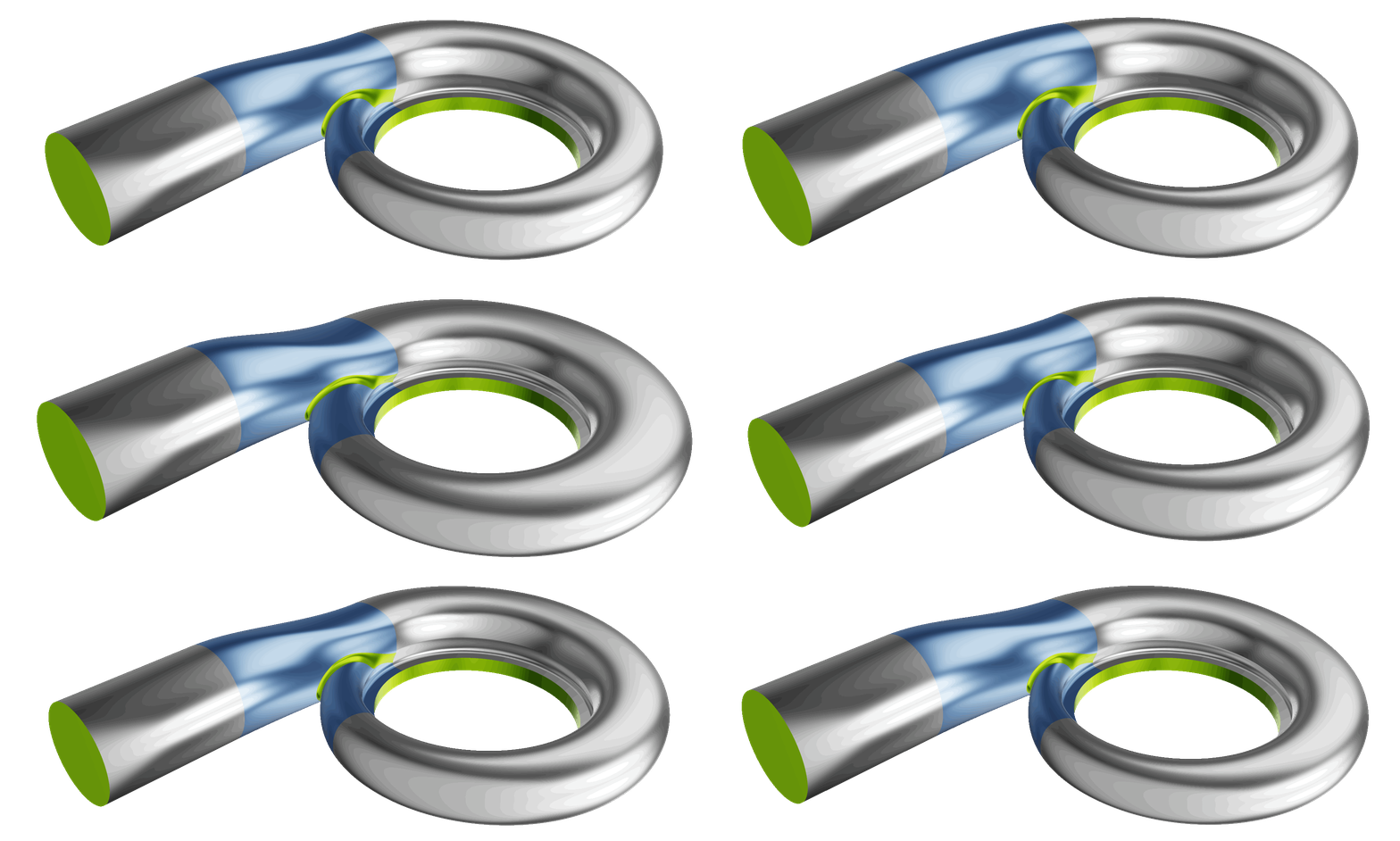
Robust variation
High robustness and flexibility of parametric models for reliable automated design studies and optimization.
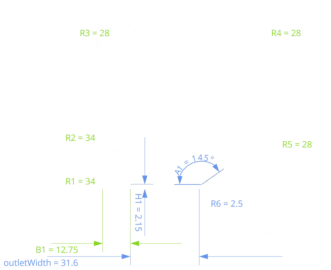
Fully customizable
No pre-defined cross-section types, full freedom for parameterization.
Exact control
Control of area, radius, or A/R progression with automated adjustment of cross-sections.
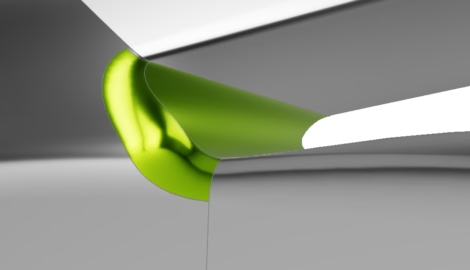
Detail oriented
Detailed modeling and tuning of the tongue area.
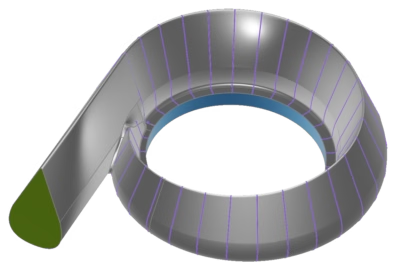
Constraint handling
Consideration of manufacturing and packaging constraints.
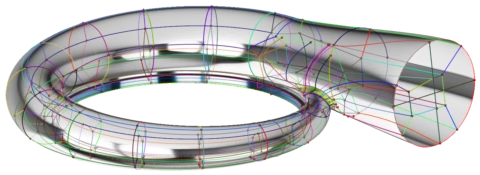
Meshing support
Inclusion and parameterization of support structures for structured meshing.
Automatically updated structured meshing for design exploration in connection with GridPro.
Interested in a specific capability?
Contact usWhat our customers say

“By using CAESES, we could massively bring down our turbine design cycle from several months to only a few weeks.”
Nicolas Lachenmaier
Engineer for Fluid Dynamics and Thermal Analysis

“I have successfully been using CAESES for many years now. It allows me to create my own customized toolbox with everything I need in the different stages of the pump design process.
The functionality of CAESES greatly accelerated and complemented our traditional design process. Finally, it lets us improve the quality of our various types of pumps.”
Toni Klemm
CFD Engineer

“The quality of the software itself along with the customer support and personable nature of the CAESES team has left quite the impression on me and my colleagues. As we use CAESES for biomedical engineering related research, it truly shows the range and capabilities of how and where CAESES can be used.”
Christopher Scheib
Researcher

“I enjoy using CAESES, as it allows me to parametrically generate geometries without ever going through a CAD design cycle.
In this sense, it really streamlined my process from concept to CFD verification.”
Ruhou Gao
Turbomachinery Engineer
Getting started
-
Use sample model
Start with a sample model.
See our samples -
Browse documentation
Browse the documentation to learn more.
Read documentation -
Free trial
You can try CAESES for free for 2 weeks.
Get free trial -
Contact us
Contact us to discuss your challenge.
Contact us
FAQs
Why is volute optimization important for turbomachinery?
The volute strongly influences flow uniformity, pressure recovery, and the overall efficiency of centrifugal compressors and pumps. Optimizing its geometry can significantly improve machine performance and operating stability.
How does CAESES automate volute design?
CAESES creates fully parametric volute models that can be coupled with CFD simulations and optimization algorithms. Automated workflows evaluate numerous design alternatives to identify volute geometries that achieve the desired aerodynamic or hydraulic performance.