Simulation- and data-driven ship hull design
Explore and optimize hull forms through parametric geometry variation, automated simulation workflows, and multidisciplinary design studies.
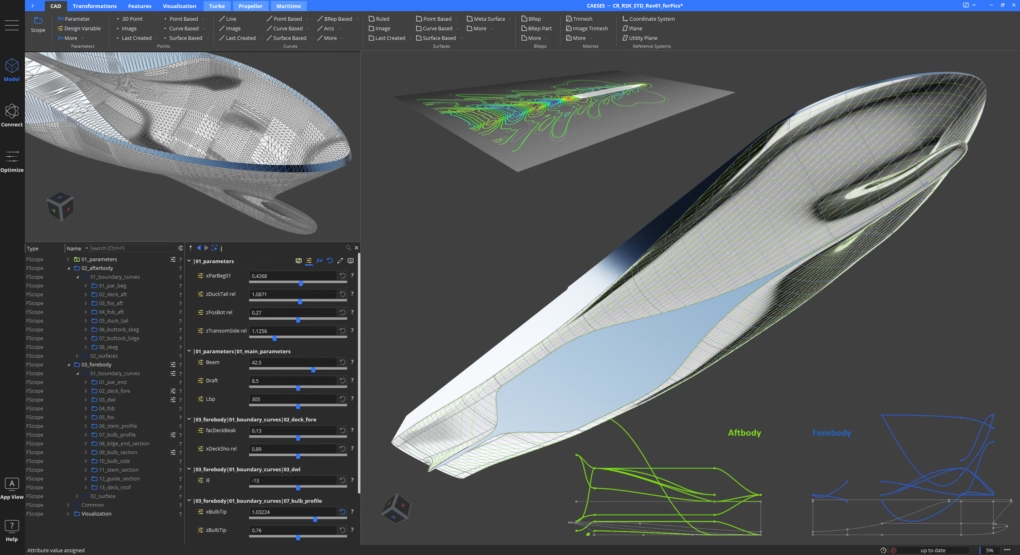
Why choose a simulation- and data-driven design approach?
Faster exploration of design alternatives
Simulation-driven design enables engineers to evaluate hundreds or even thousands of hull variations virtually, identifying high-performing concepts much earlier than with traditional trial-and-error methods. This allows for more innovative and better-performing hull designs within the same development timeframe.
Improved hydrodynamic efficiency and sustainability
By leveraging simulations and operational data, designers can optimize hull forms for lower resistance, reduced fuel consumption, and lower emissions across real operating conditions. This helps shipowners meet both economic and environmental targets.
Better-informed decisions through data insights
Large simulation datasets provide detailed insight into how specific geometric changes influence vessel performance. This enables engineers to make informed design decisions based on quantified trade-offs rather than relying solely on experience or limited design iterations.
CAESES’ ship hull design capabilities
CAESES is a specialized CAD and automation tool for optimizing complex, performance-critical geometries, with some dedicated capabilities that make it particularly suited for the design of cutting-edge propellers.
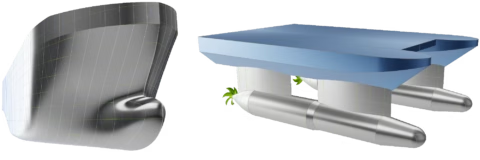
Smart parametric modeling
Complete parametric modeling capabilities for any type of hull, including container ships, tankers, bulkers, ferries, cruise ships, catamarans, yachts, planing hulls, etc.
Smart parametric modeling approach based on parameterized cross-sections and continuous control of the respective input parameters.
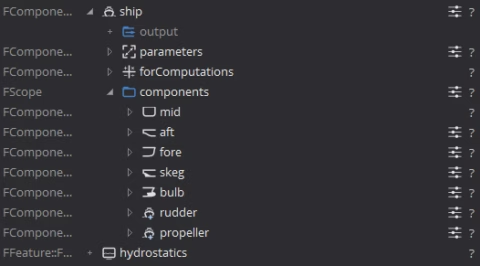
Intuitive yet customizable
Dedicated component-based modeling workflows for ship hulls greatly simplify the process.
Yet, high level of customization, i.e., no black box models and full freedom to set up user-defined parameterizations and workflows.
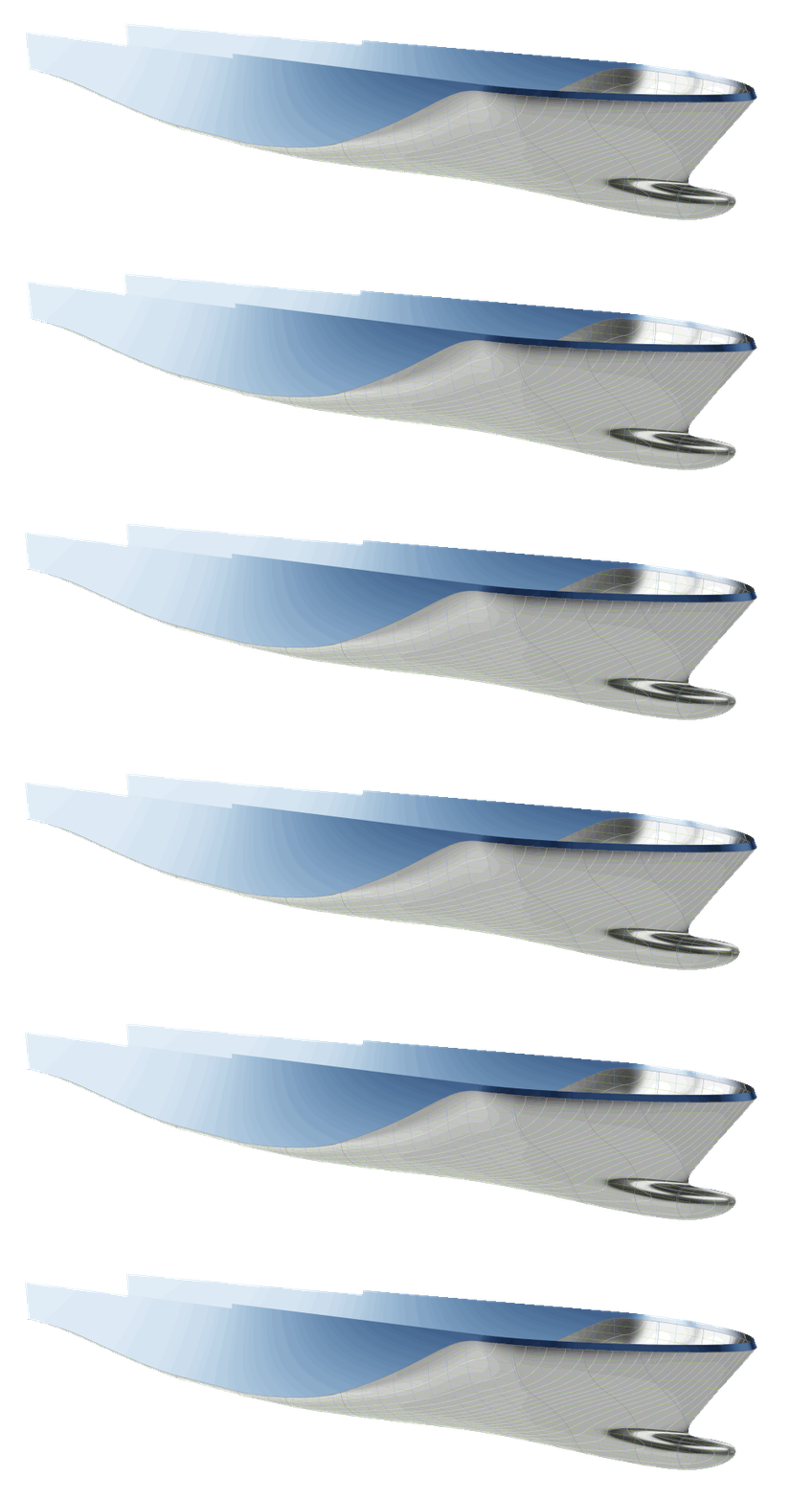
Robust variation
High robustness and flexibility of parametric models for reliable automated design studies and optimization.
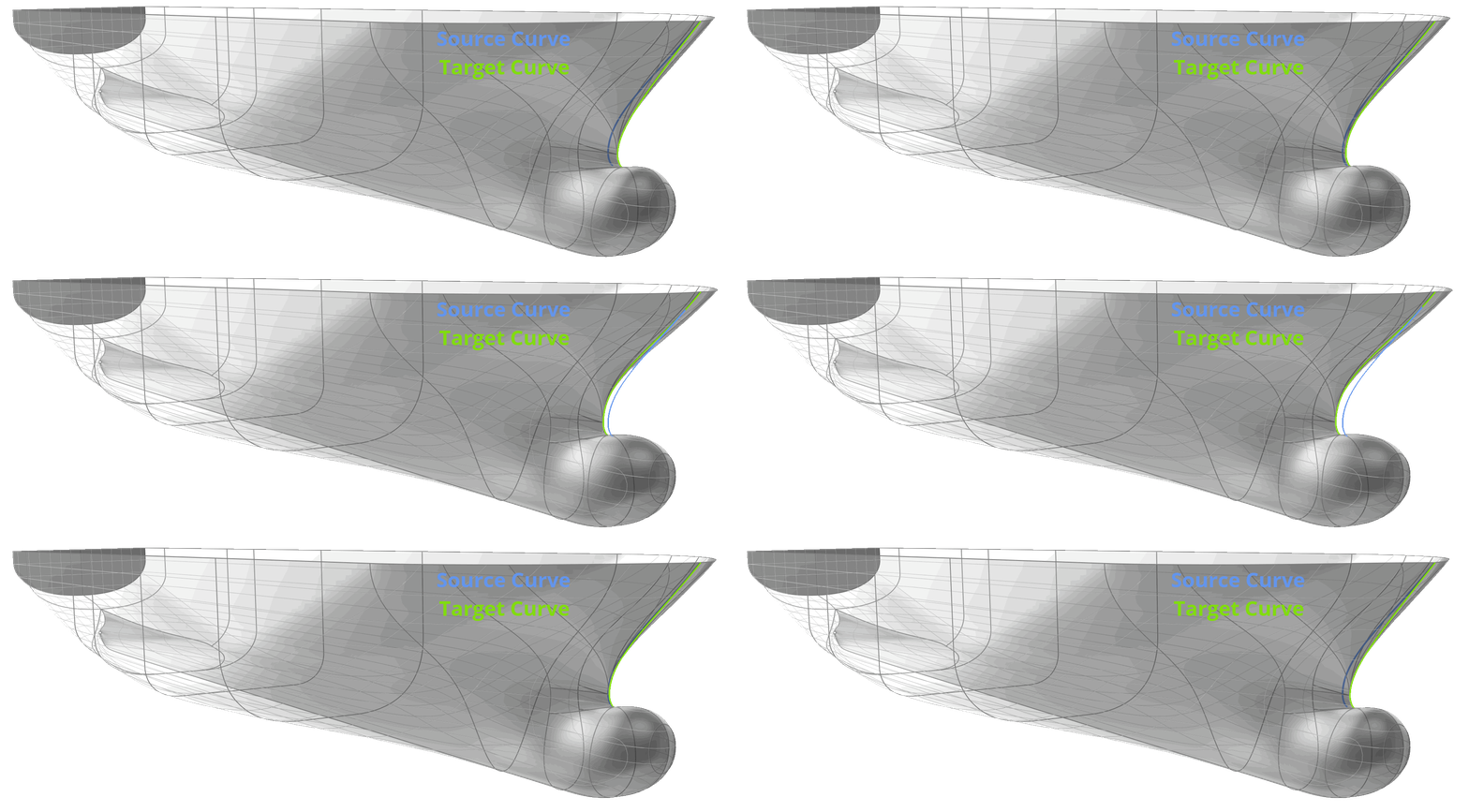
Fast geometry morphing
Alternatively, morphing methods (generic or marine-specific, like Lackenby shift) to deform existing – imported – geometry.
Morphing can be applied to NURBS surface geometry and be exported as IGES/STEP/etc., or to discretized geometry such as meshes or tessellations.
Integrated hydrostatics
Computations of basic hydrostatics, i.e., upright hydrostatics and intact stability.
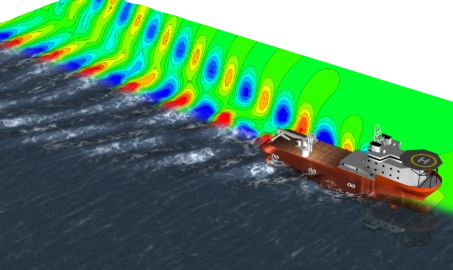
Workflow integration
Dedicated interface for SHIPFLOW CFD solver and generic interface for coupling to arbitrary external simulation and calculation tools.
Simulation-ready geometry exports, including support of offset and panel data.
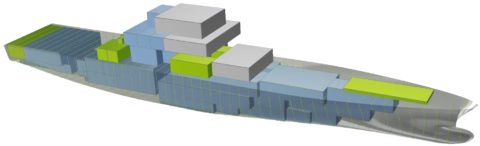
Constraint handling
Full consideration and integration of constraints typical for ship design, including displacement, stability, center of buoyancy, hard points (engine foundations, containers, tanks, thrusters …), number of containers in hold, spaces, and more.
Interested in a specific capability?
Contact usWhat our customers say

“CAESES was a big help. It saved us a lot of time. Also, our hull looks very different from the hulls of our competitors. It was, amongst other factors, thanks to CAESES that we found this approach. I doubt, we would have found it just by empirical trial and error.”
Martin Fischer
Chief Designer, 37th America’s Cup campaign

“If the hull is already optimized using CAESES, it cannot be improved any further.”
Cho Tae-Ik
Executive Vice President
“CAESES is a powerful tool to find the best design. The fully-parametric modelling technology helps us break through the limitations of the original design and brings us far more innovation.”
He Jaiyi
Lead Engineer at MARIC

“We have been using CAESES as a geometry tool for optimization of ship hulls and appendages since 2008. The open parametric approach exactly meets our way of working. CAESES combines distinct mathematical CAD with modern handling and appearance. It is easy and intuitive to use, but does also provide full control for all who need it. With its inbuilt feature programming, it even allows us to quickly implement solutions for almost all kinds of additional ideas. CAESES proved to be the best available solution in the market for our services.”
Bardo Krebber
Naval Architect and Optimization Specialist
Getting started
-
Use sample model
Start with a sample model.
See our samples -
Browse documentation
Browse the documentation to learn more.
Read documentation -
Free trial
You can try CAESES for free for 2 weeks.
Get free trial -
Contact us
Contact us to discuss your challenge.
Contact us
FAQs
What is the best software for ship hull optimization?
We are certainly biased, but CAESES is a leading platform for simulation- and data-driven ship hull optimization. It enables naval architects to create robust parametric hull models, automate CFD workflows, and optimize hull forms for resistance, propulsion, seakeeping, and other hydrodynamic performance criteria.
What is simulation-driven ship hull design?
Simulation-driven ship hull design combines parametric geometry modeling with automated CFD simulations to evaluate and optimize hull forms before physical model testing. CAESES enables engineers to explore thousands of hull variants efficiently, leading to improved hydrodynamic performance and reduced development time.
What is data-driven engineering, and how does CAESES support it?
Data-driven engineering uses simulation and experimental data to better understand design behavior, identify trends, and make informed engineering decisions. The CAESES Insight module provides powerful tools to analyze, filter, and visualize engineering datasets, helping engineers extract actionable insights from design studies and optimization results. By combining simulation-driven design with advanced data analytics, CAESES enables faster and more informed product development.
How does CAESES accelerate ship hull optimization?
CAESES automates the entire design workflow - from hull generation and geometry export to CFD execution and optimization. By eliminating manual geometry updates, naval architects can evaluate significantly more design alternatives and identify high-performing hull forms faster.
Can CAESES optimize a ship hull for multiple operating conditions?
Yes. CAESES supports multi-condition and multi-objective optimization, allowing hull forms to be evaluated across different speeds, drafts, loading conditions, or operating profiles. This helps identify designs that deliver balanced performance rather than being optimized for a single design point.