Simulation- and data-driven piston bowl design
Explore and optimize piston bowl geometries through parametric geometry variation, automated simulation workflows, and multidisciplinary design studies.
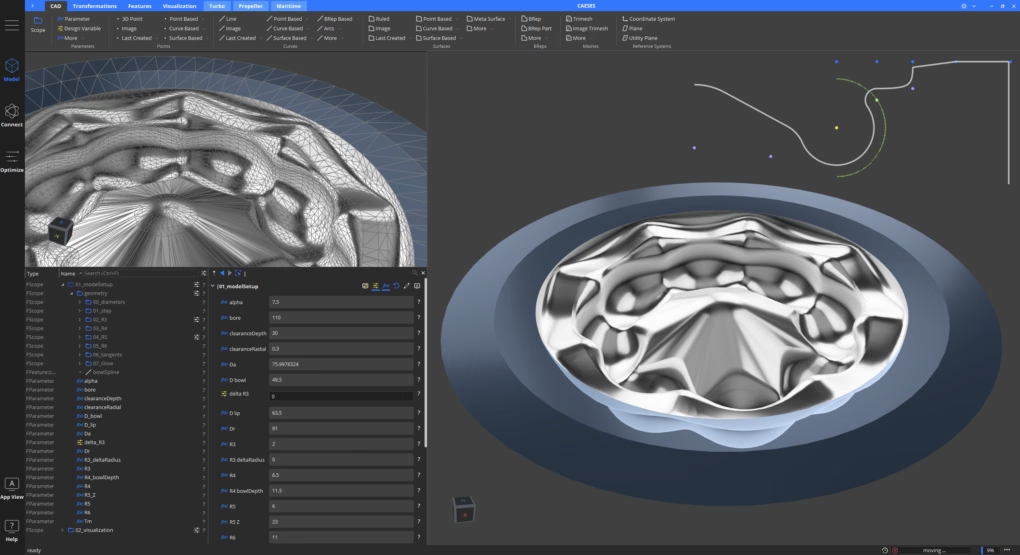
Why choose a simulation- and data-driven design approach?
Accelerated exploration of design concepts
Simulation-driven design enables engineers to evaluate a wide range of piston bowl geometries virtually, identifying promising concepts much faster than traditional iterative development. This accelerates the design process while allowing for more extensive exploration of the design space.
Improved combustion efficiency and emissions
Simulation-based optimization helps refine piston bowl shapes to enhance air–fuel mixing, combustion characteristics, and heat release. This can lead to improved fuel efficiency while reducing emissions such as NOₓ and soot.
Deeper understanding of in-cylinder flow and combustion
Detailed simulations provide insight into complex phenomena such as swirl, tumble, spray interaction, flame propagation, and heat transfer. These insights support more informed design decisions and the development of piston bowls that deliver robust performance across a range of operating conditions.
CAESES’ piston bowl design capabilities
CAESES is a specialized CAD and automation tool for optimizing complex, performance-critical geometries, with some dedicated capabilities that make it particularly suited for the design of cutting-edge piston bowls.
Unlimited parameterization
Fully user-defined piston bowl parameterizations with no template restrictions.
Use lines, arcs, splines, or any combination to define the exact bowl profile required.
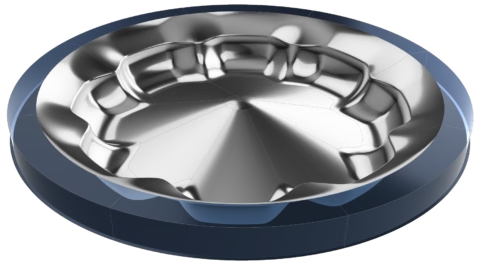
3D bowl shaping
Circumferential variation of the bowl profile for advanced geometries, including wavy bowl designs.
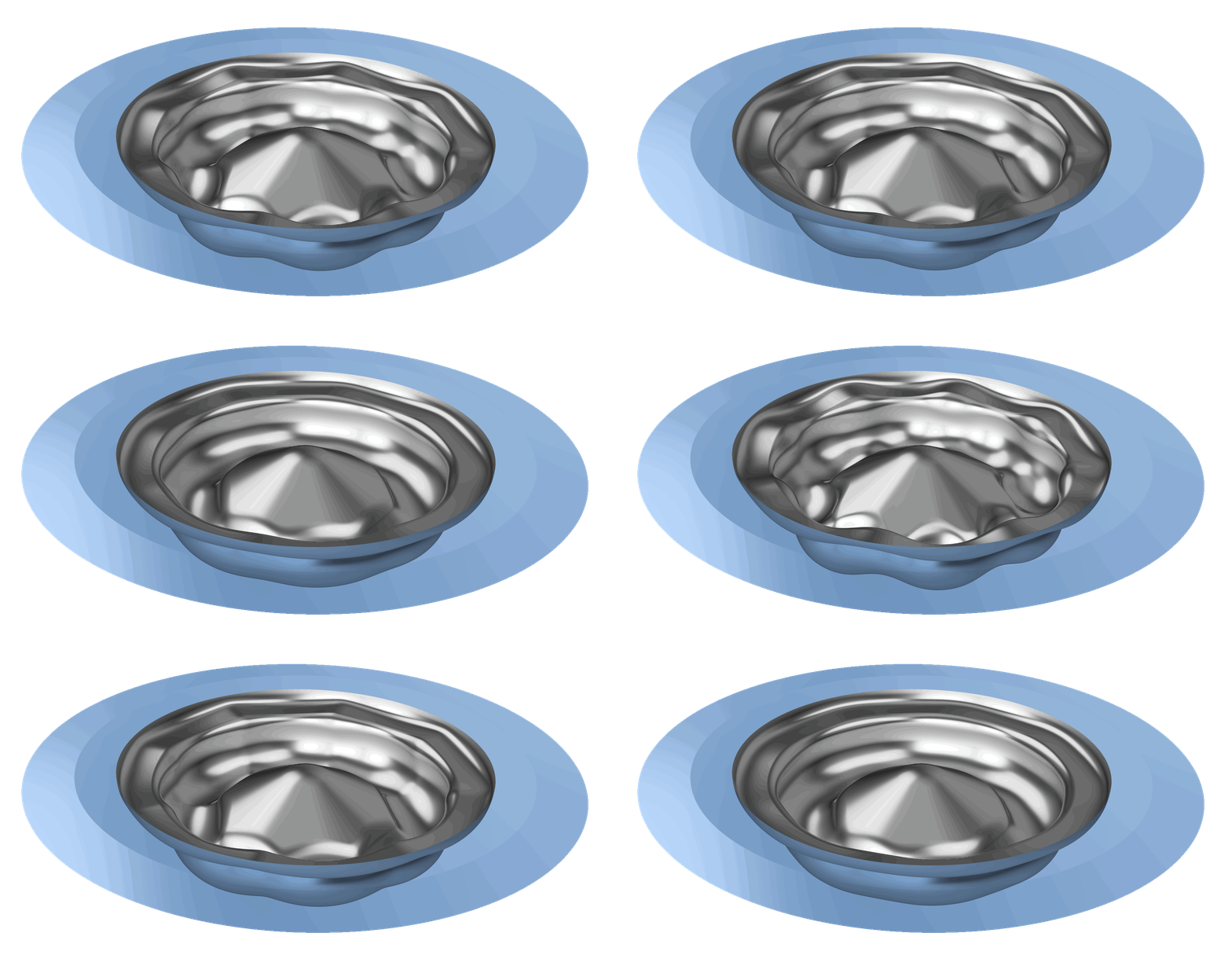
Robust geometry variation
100% robust generation of geometry variants through smart parameterization and dependency-based modeling.
Reliable automated design studies with no failed geometry variants.
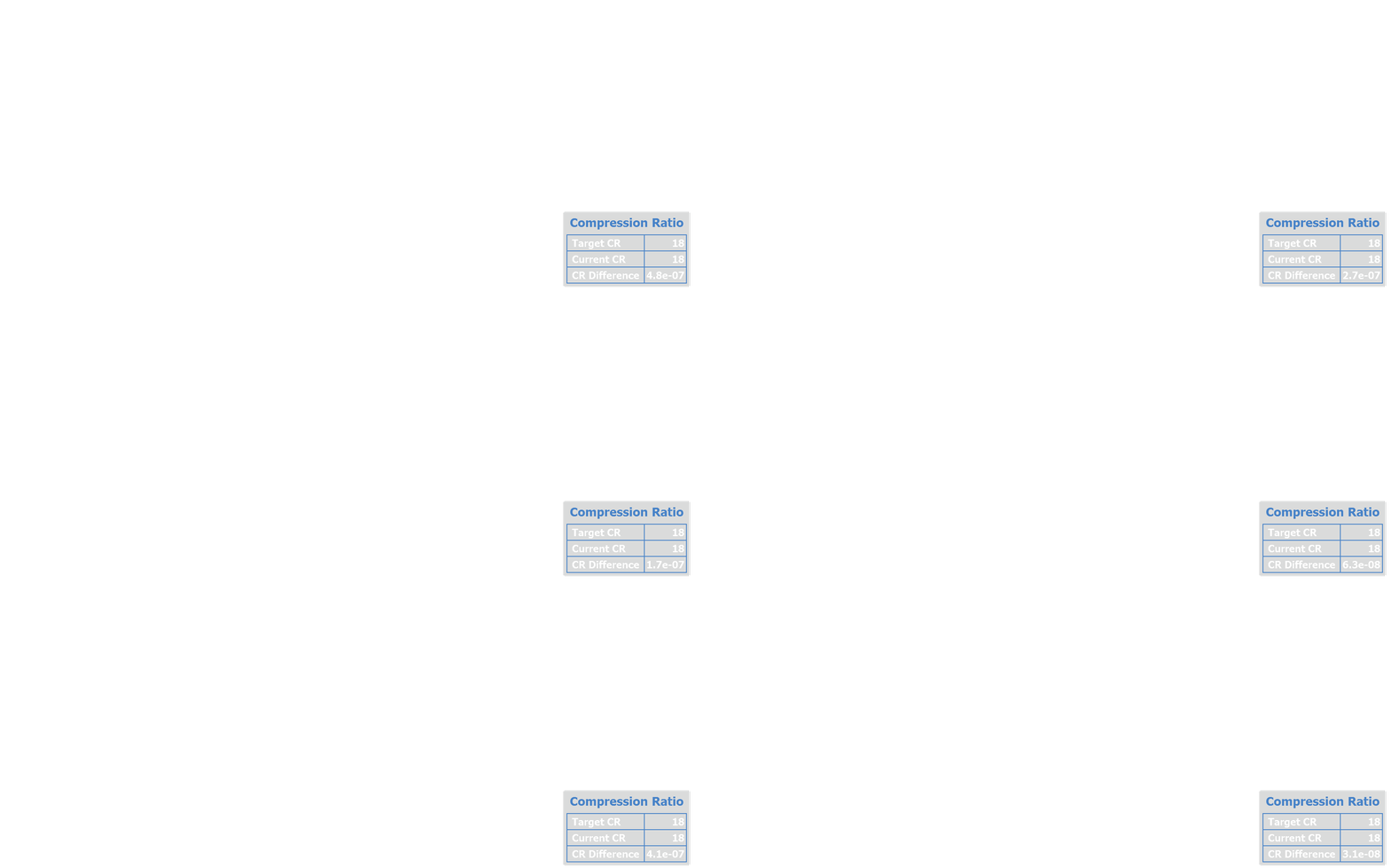
Automatic compression ratio control
Automatic adjustment of every design variant to maintain a target compression ratio.
Flexible optimization workflow with user-defined adjustment variables and configurable order of precedence.
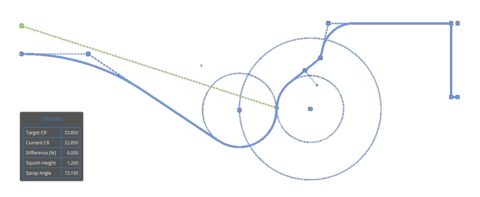
Automated design constraints
Automatic adaptation of dependent design parameters, such as spray targeting, to match changing bowl geometries.
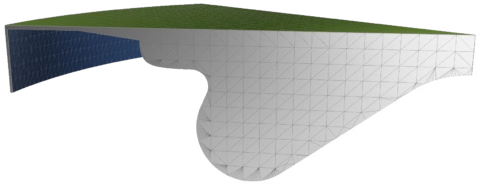
Simulation-ready exports
Geometry export in multiple CAD and CFD formats, including CONVERGE "surface.dat".
Support for patch naming to enable automated assignment of mesh settings and boundary conditions.
Integrated design studies
Combined optimization of piston bowl geometry, injection strategy, and process parameters.
Direct parameterization of CFD input files and scripts through the Software Connector interface, enabling automated studies of fuel composition, EGR rate, and other operating conditions.
Interested in a specific capability?
Contact usGetting started
-
Use sample model
Start with a sample model.
See our samples -
Browse documentation
Browse the documentation to learn more.
Read documentation -
Free trial
You can try CAESES for free for 2 weeks.
Get free trial -
Contact us
Contact us to discuss your challenge.
Contact us
FAQs
Why is piston bowl geometry important for combustion performance?
The piston bowl has a major influence on air-fuel mixing, combustion efficiency, emissions, and thermal loading. Careful optimization of the bowl shape helps improve combustion characteristics while meeting performance and emission targets.
How does CAESES support piston bowl optimization?
CAESES generates fully parametric piston bowl geometries and automates simulation-driven optimization. Engineers can evaluate numerous bowl shapes using CFD-based combustion workflows, reducing development time while identifying high-performing designs.