Simulation- and data-driven intake port design
Explore and optimize intake port geometries through parametric geometry variation, automated simulation workflows, and multidisciplinary design studies.
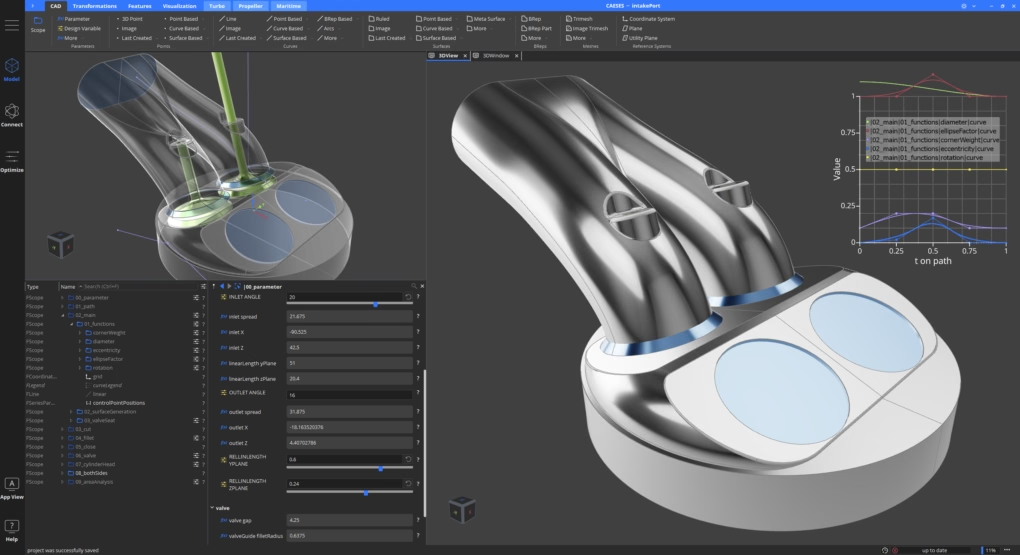
Why choose a simulation- and data-driven design approach?
Accelerated exploration of intake port geometries
Simulation-driven design enables engineers to evaluate a wide range of intake port concepts virtually, rapidly identifying designs that meet performance targets. This shortens development cycles while allowing for a more comprehensive exploration of the design space.
Improved airflow and engine breathing
Simulation-based optimization helps refine port geometries to maximize flow capacity while achieving the desired in-cylinder motion, such as swirl or tumble. This enhances cylinder filling, supports efficient combustion, and improves overall engine performance.
Deeper understanding of intake flow behavior
Detailed simulations provide insight into complex flow structures, pressure losses, flow separation, and the generation of in-cylinder motion. These insights enable engineers to make informed design decisions and develop intake ports with higher efficiency and more consistent performance.
CAESES’ port design capabilities
CAESES is a specialized CAD and automation tool for optimizing complex, performance-critical geometries, with some dedicated capabilities that make it particularly suited for the design of cutting-edge intake ports.
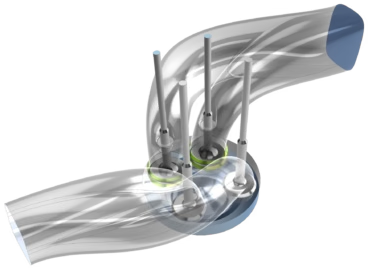
Flexible port parameterization
Parametric modeling of arbitrary intake port geometries, including symmetric, asymmetric, helical, and custom designs.
Direct control of flow-relevant parameters, such as cross-sectional area distribution, including valve guide and stem blockage effects.
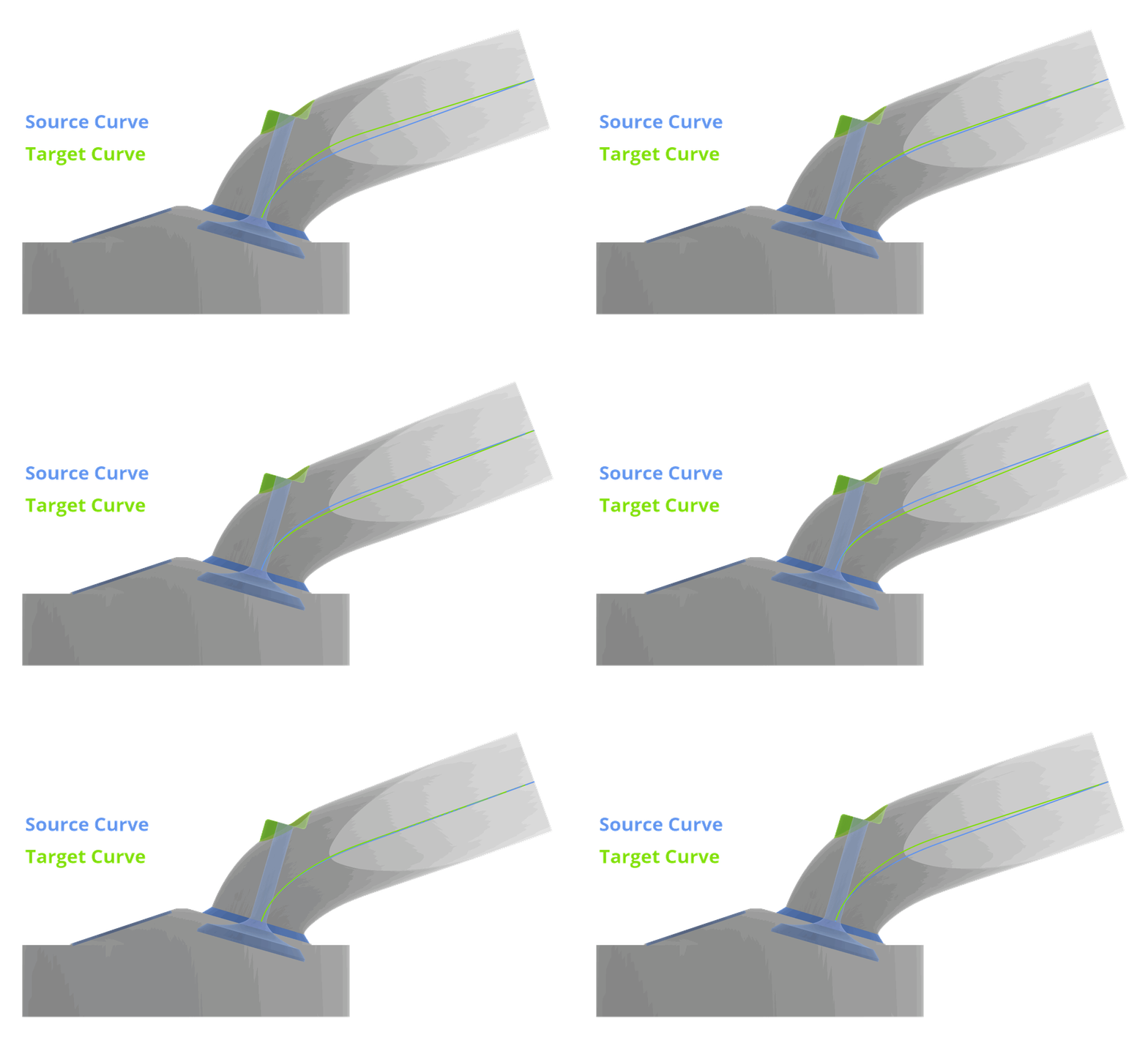
Fast geometry morphing
Alternatively, deform existing imported geometries using robust morphing methods.
Morphing can be applied to NURBS surfaces or discretized geometries (meshes, tessellations) and exported as IGES, STEP, and other standard formats.
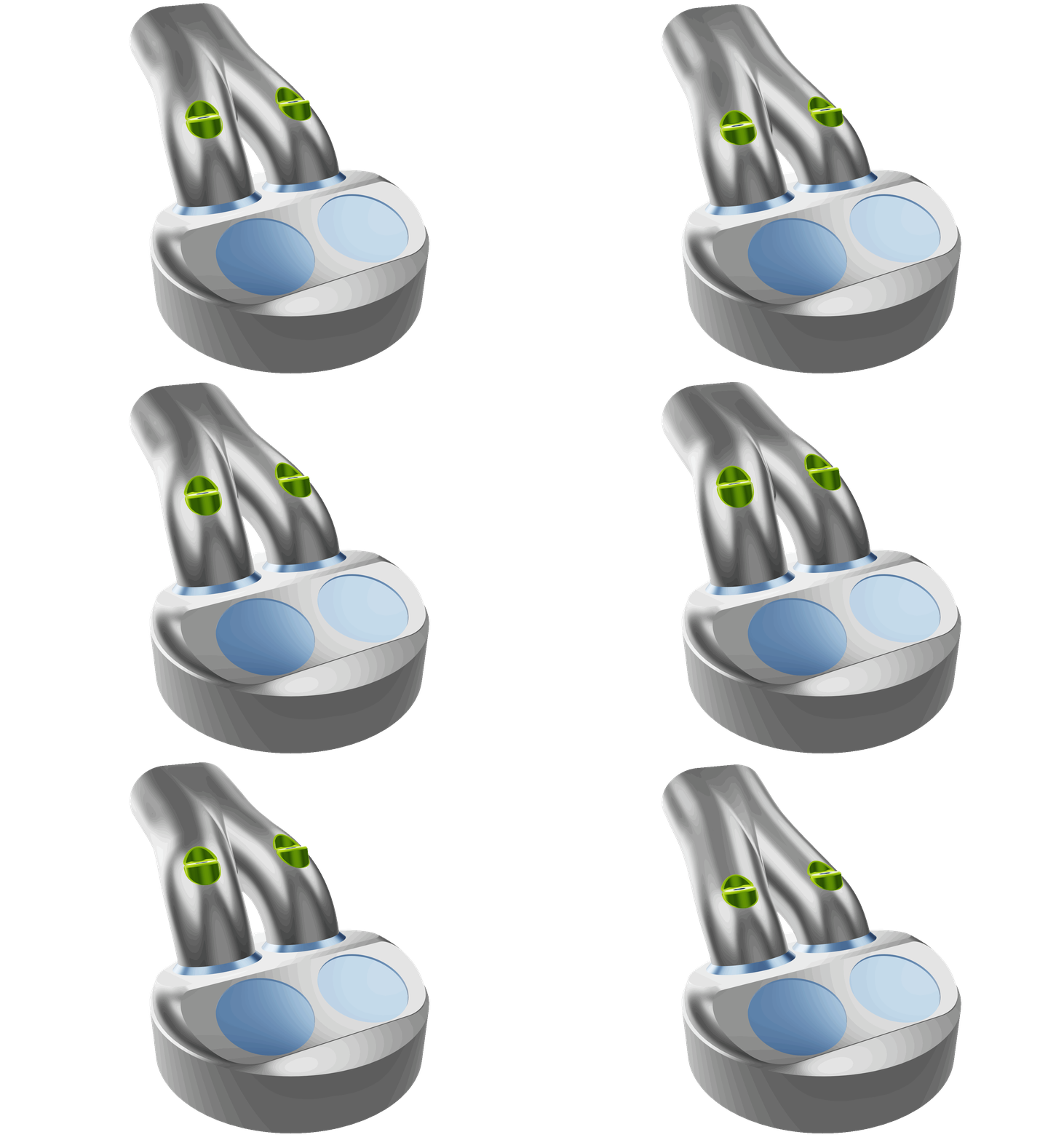
Robust geometry variation
High robustness and flexibility of parametric models for reliable automated design studies and optimization.
Smart parameterization and dependency-based modeling ensure 100% robust generation of geometry variants.
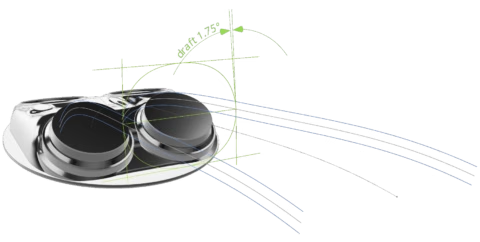
Manufacturing constraints
Manufacturing requirements, such as draft angles and casting constraints, can be embedded directly into the parametric model.
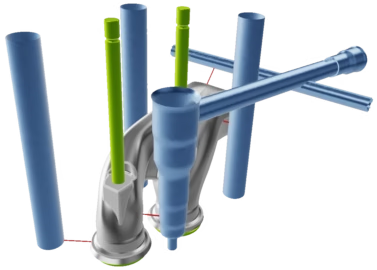
Packaging constraints
Automatic monitoring of clearances to neighboring components ensures compliance with packaging requirements throughout the design study.
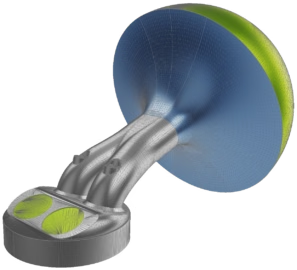
Simulation-ready exports
Geometry export in multiple CAD and CFD formats with support for patch naming.
Enables automated assignment of mesh settings and boundary conditions in downstream simulation workflows.
Interested in a specific capability?
Contact usGetting started
-
Use sample model
Start with a sample model.
See our samples -
Browse documentation
Browse the documentation to learn more.
Read documentation -
Free trial
You can try CAESES for free for 2 weeks.
Get free trial -
Contact us
Contact us to discuss your challenge.
Contact us
FAQs
How can CAESES optimize engine intake ports?
CAESES enables engineers to parameterize intake port geometry based on flow-relevant design variables such as cross-sectional area distribution, centerline shape, and valve seat geometry. Automated CFD studies then identify designs that improve airflow and engine performance.
Can CAESES optimize complex intake port geometries?
Yes. Both fully parametric models and morphing techniques can be used to modify complex intake ports. This allows engineers to optimize existing cylinder head designs while maintaining geometric constraints and manufacturing requirements.